New
Poria: the Quiet Herb for Dampness — Does It Really Dry Dampness, Tonify the S
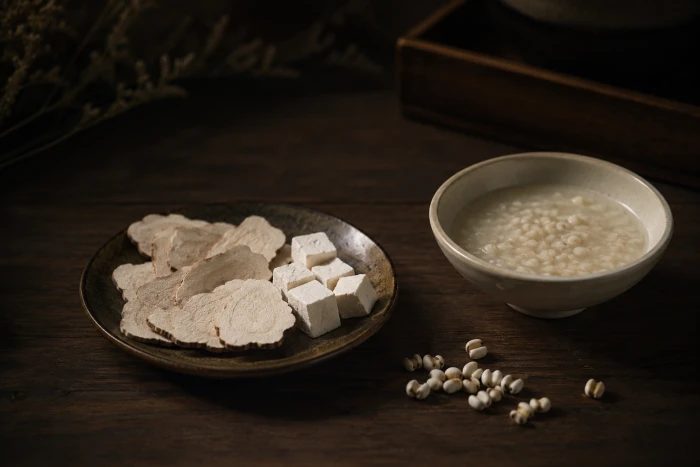
What is poria (fu ling)? It's not a root but a fungus. How to use it for dampness, the right amounts, who should skip it
Read moreThis isn't a travel guide, a pharmacy, or a wellness shop. It's a quiet door — inside, there may be stories that move us both.
I'm Bong. My father and I are both traditional Chinese medicine pharmacists. I've prepared a lot of content for you — a Chinese perspective to help you on your journey to understand your own body.
Take free TCM constitution, sleep, and stress tests online — no signup. Discover your body type, sleep pattern, and stress level in minutes.
 Test
TCM Constitution Test
A full professional TCM constitution assessment based on the standard body-constitution model, with answer-consistency check and AI-powered result interpretatio
Start test
100% Free
Test
TCM Constitution Test
A full professional TCM constitution assessment based on the standard body-constitution model, with answer-consistency check and AI-powered result interpretatio
Start test
100% Free
 Test
Sleep Quality & Insomnia Type Test
Sleep takes up about one-third of our lives, yet it is often neglected. This test maps your personal sleep profile across five dimensions: sleep latency, sleep
Start test
100% Free
🌱
Test
Ayurveda Dosha Test
A full professional Ayurvedic Dosha assessment based on Ayurvedic Dosha theory, with answer-consistency check and AI-powered result interpretation, offering per
Start test
Test
Sleep Quality & Insomnia Type Test
Sleep takes up about one-third of our lives, yet it is often neglected. This test maps your personal sleep profile across five dimensions: sleep latency, sleep
Start test
100% Free
🌱
Test
Ayurveda Dosha Test
A full professional Ayurvedic Dosha assessment based on Ayurvedic Dosha theory, with answer-consistency check and AI-powered result interpretation, offering per
Start test
A simple breathing circle. No sign-up. Click start and just breathe with the circle.
Quiet your thoughts, adjust your state.
Follow the circle for a few cycles. Inhale, hold, exhale — let the body soften before you read on.
Go to full breathing guide →After the test, read deeper. These articles are published as they are written — no algorithm, just an honest voice.
What is poria (fu ling)? It's not a root but a fungus. How to use it for dampness, the right amounts, who should skip it
Read more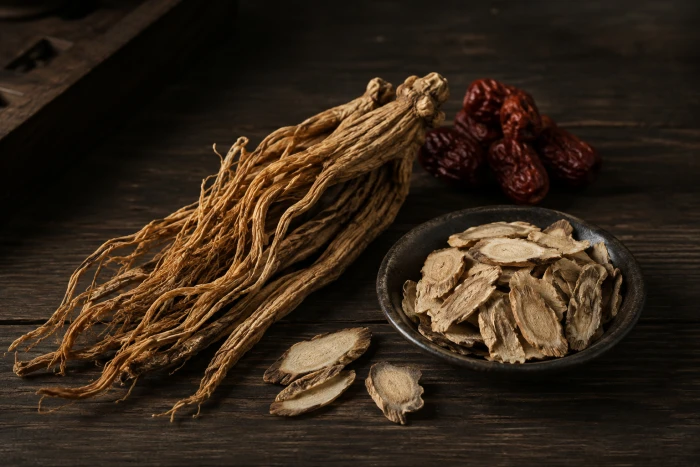
What is dong quai and can you take it during your period? How to use the classic women's herb to nourish blood, who shou
Read more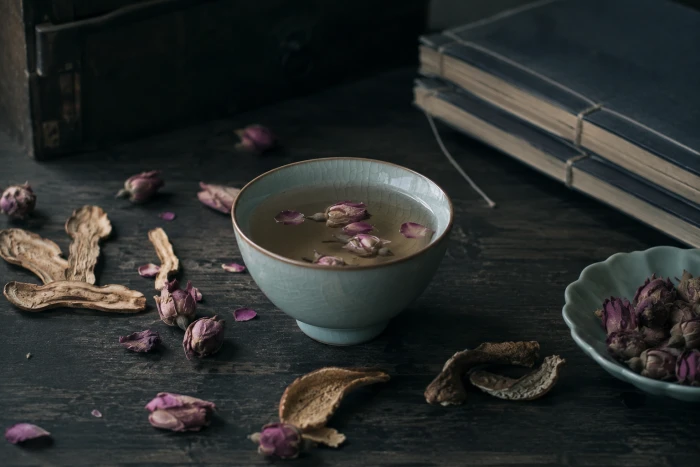
What is a qi stagnation constitution? Why do you keep sighing, feel a blocked throat and tight chest, and lose energy? H
Read more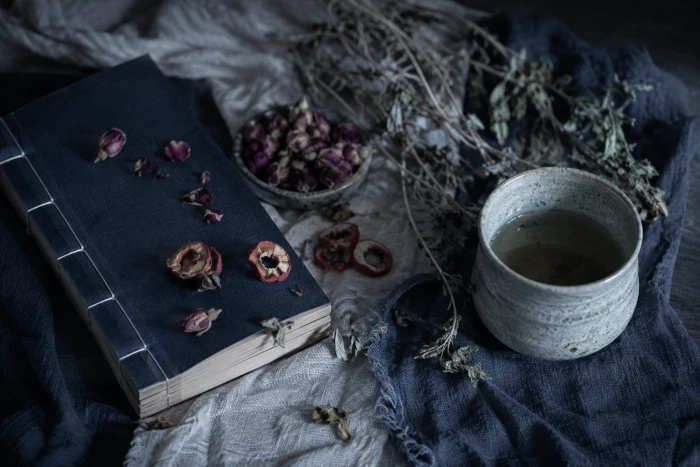
What is a blood stasis constitution? Why bruising, dark spots and painful periods? Learn how it forms plus diet, movemen
Read more
Spicy food breaks you out, stress brings eczema back? Your gut keeps the books for your skin. Learn how this axis works,
Read more
Waking at 2 or 3 a.m. every night? Exhausted by day, and it is not always your fault. Learn why this hour, the first mov
Read moreThe unfiltered story behind this website.
Hello. I'm Bong, writing to you from China—thousands of miles away. I know you've already heard about China through countless channels. Its GDP, its vast territory, its sheer scale. It's almost impossible to ignore.
But this website is not here to give you a comprehensive introduction to China. Any sophisticated AI can do that far better than I can.
What I want to share with you is my own story: growing up and growing older in China, and the quiet, profound influence of my father, a traditional Chinese medicine pharmacist, who shaped my way of seeing the world from the very beginning.
Through this website, I want to get to know you. Where are you? How are you feeling? Are you well? Have you eaten?
This is a deeply Chinese way of saying hello. With a population so vast, hunger has been a shadow over this nation since the 18th century. The problem of feeding everyone was only truly solved in the last half-century. My grandmothers told me stories of the days they starved—days when they were already old and never lacked food again, yet I could still see the deep fear in their eyes when they spoke of it. So when a Chinese person asks, "Have you eaten?", it is perhaps the most sincere expression of care we can offer. Even today.
You might know a few things about China: Kung Fu, Jackie Chan, or perhaps a land steeped in superstition. That's fine. I'm not here to explain or defend anything. I will simply tell you exactly what I see, and how these elements of China might connect with you more closely than you imagine.
This website will hold to one principle: to show you a side of Chinese culture that you cannot find in any mainstream media or AI-generated summary.
One more thing: people naturally view their homeland through a lens of nostalgia, an automatic filter that beautifies everything. I will try my best to remove that filter.
I wish I were German. I admire their rigor and quiet pride.
I wish I were French. The romance there needs no explanation.
If I were from Cape Verde, that would be wonderful too—their performance in the 2026 World Cup was stunning.
But the reality is, I am Chinese. That cannot be changed.
Yet this identity gives me a specific vantage point—one from which I can share some ancient wisdom with you.
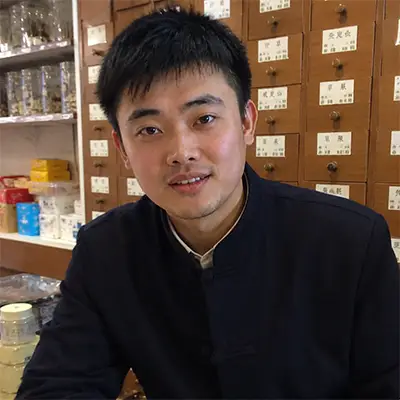
It's rare that you've made it this far. Chinese medicine does contain many unscientific parts, just as every civilization inevitably carries its dregs. What I hope 5baba.com can give you is a more modern, more accessible way to understand your body and mind — my pharmacy background is just the starting point for finding that way.
— Bong, from China
Six paths into Chinese wellness culture. Each one starts with a question about the body and ends with a story about living.
Discover your TCM body constitution type through our nine-constitution tests and get personalized wellness advice.
Understand the Five Elements and Yin-Yang theory in TCM wellness for mind-body balance.
TCM food-as-medicine guide, select tonic foods & herbal remedies matching your body constitution.
TCM wellness wisdom following the 24 solar terms for mind-body harmony with nature.
TCM breathing guidance and body cultivation methods, including Qigong and Baduanjin.
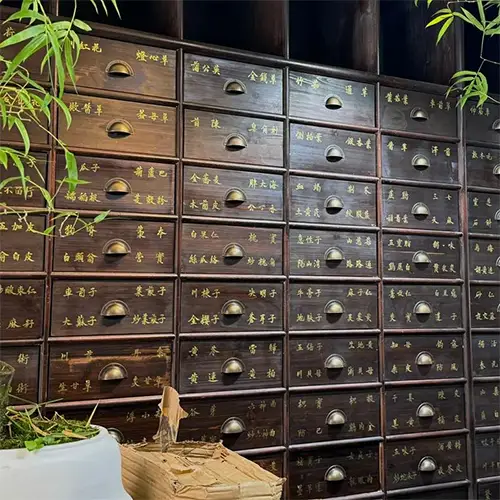
A son opens his father's drawer to share TCM herbal wisdom, family wellness stories, generational health tips, and the everyday culture of Chinese medicine.
I won't sell you miracle cures, and I won't pretend China is only ancient or only modern. I'll simply tell you what I've seen, tasted, smelled, and learned — and let you decide what it means for your life.