
5baba.com
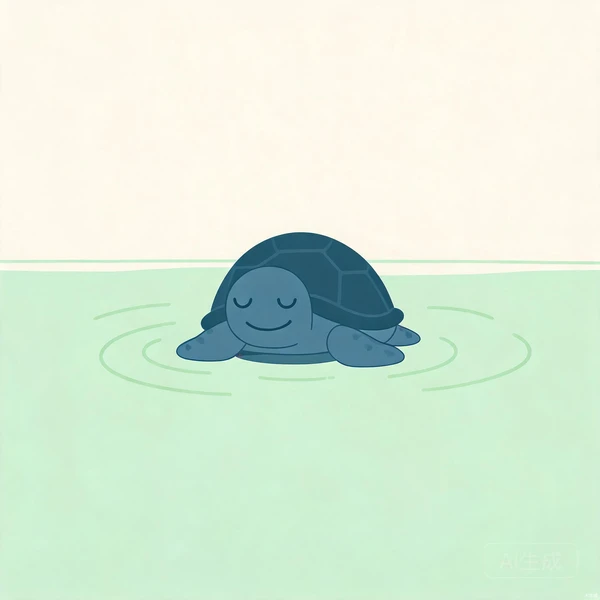
Steady Turtle
The steady turtle
Your Stress Profile

Steady Turtle

Your stress system has both elasticity and a floor. You get tense and tired too, but you read the signals, regulate actively, and are not easily toppled by a single event. Your strength is a sensitive parasympathetic response that returns to baseline fairly quickly, with steadier prefrontal regulation over the amygdala. Resilience is not a talent but the compound interest of habits. The tweaks below help you stay steady even in bigger waves.

Resilient Self-aware Connected
-- Reliability score
Reliability score

Your answers are consistent. The result is reliable.

Share your result

Share your result

Share your result with friends and see what their stress profile is.

Stress Radar

Dimension Scores

The radar shows your relative outline across five stress dimensions; the bars give specific scores. Higher scores mean that dimension needs more attention now.

Stress Radar

A larger outline biased toward one axis means that dimension stands out most in your current stress pattern.

Dimension Scores

Each dimension is scored out of 10; above 6 is worth making an adjustment priority.

Population proportion

See how your stress profile compares to the general population.

Steady Turtle --

This means out of 100 people who took the test, roughly this many share your stress type. A smaller share means your pattern is more unique; a larger one means more people experience similar stress.

Core Traits

Your stress system has elasticity and a floor. Below we explain resilience and small habits that keep you steady in bigger waves.

Sensitive brake

Parasympathetic responds well; you return to baseline fairly fast。Social tie is the strongest resilience predictor, steadier than tricks.

Steady regulator

Prefrontal control over the amygdala is stable; less catastrophizing。Fixed wake calibrates clock and HPA axis better than early sleep.

Knows the lift

You catch the fall early and have ways to catch yourself。Principle: aerobic raises HRV and vagal tone, the base of resilience.

Resilience is the compound interest of habits, not a talent.

Your Strengths

Quick recovery

After setbacks you usually bounce back within days。Social tie is the strongest resilience predictor, steadier than tricks.

Clear boundaries

You separate controllable from not, less inner drain。Fixed wake calibrates clock and HPA axis better than early sleep.

Real ties

At least one relationship where you can tell the truth。Principle: aerobic raises HRV and vagal tone, the base of resilience.

Watch Outs

!Easy to coast

Because you cope, you may skip the maintenance that keeps you strong。Social tie is the strongest resilience predictor, steadier than tricks.

!Others lean on you

Your steadiness can become everyone’s shock absorber。Fixed wake calibrates clock and HPA axis better than early sleep.

!Hides dips

You smile through overload and miss early signals。Principle: aerobic raises HRV and vagal tone, the base of resilience.

Bedtime Rituals

5-minute ritual

Same time daily: breath or three small wins; habit beats willpower.

Support account

Maintain ties now, not only when broken.

Monthly check

Score sleep, movement, social, meaning; catch drift early.

Sleep Hygiene

Calm practice

  • Same wind-down and wake time.
  • Name one thing that went well.
  • Lower stimulation before bed.

Routine

  • Dark, cool room.
  • No screens the last hour.
  • Wake without snooze.

The anchor holds best on a steady rhythm.

Daily Rhythm

Diet Tips

Recommended
  • Steady meals keep mood and focus flat.
  • Omega-3 and B support the calm brain.
  • Regular meals protect the recovery account.
Limit
  • Skipping meals drops the buffer.
  • Too much caffeine masks fatigue.
  • Late alcohol steals deep sleep.

A fed, steady base is the anchor’s chain.

Movement Tips

Recommended movement
  • Daily walk keeps HRV responsive.
  • Yoga or stretch sustains the brake.
  • Any movement you enjoy beats a grim chore.
Cautions
  • Do not skip rest to train.
  • Variety keeps it going.
  • Pair motion with real downtime.

Movement keeps the anchor from dragging.

7-Day Plan

<p>These 7 days are "maintenance and upgrade": your base is solid - the point is not to skip care because you are stable, and to thicken resilience.</p>

Day 1

HRV morning

Brisk walk or cycle 20 min. Aerobic raises heart-rate variability and vagal tone - the physiological base of resilience.

Day 2

Deep connection

One real 15-min talk, phone down. Social tie is the strongest resilience predictor, steadier than any technique.

Day 3

Sleep gate

Fixed wake time even after late night. Stable wake calibrates clock and HPA axis better than early sleep alone.

Day 4

Nature dose

20 min green outdoor. Light and green lower cortisol, a soft tune-up for an already good system.

Day 5

Flow hobby

One thing you like purely, no outcome. Flow is active recovery, reinforces "who I am" over "what I did".

Day 6

Small help

Do one small favor. Altruism raises meaning and belonging, back-reinforcing your emotional base.

Day 7

Gratitude review

Write three good things this week. Gratitude practice conditionally lifts subjective resilience, helping the brain "save" good events.

4-Week Plan

<p>Monthly goal: turn occasional stability into a sustainable rhythm so resilience holds under pressure.</p>

1
Week 1

Exercise rhythm

3 aerobic + 1 strength weekly. Regular training sustains HRV - the non-drug prescription for long-term resilience。Principle: aerobic raises HRV and vagal tone, the base of resilience.

2
Week 2

Relationship invest

One deep talk or shared time weekly. Treat social tie as an asset; it pays first when you are low。Social tie is the strongest resilience predictor, steadier than tricks.

3
Week 3

Stress rehearsal

Foresee next week's stressors, write responses. Planning lowers the amygdala's surge alert; resilience partly acts in advance。Fixed wake calibrates clock and HPA axis better than early sleep.

4
Week 4

Growth review

Month-end: how did I catch myself? Making implicit skill explicit makes it easier to call next time。Principle: aerobic raises HRV and vagal tone, the base of resilience.

Quick Resets

🎯Breathe

A minute of long exhales re-centres fastest.

💪Move

A short walk resets the system.

Name it

Say the feeling; it loses grip.

Detailed Interpretation

Your stress system has both elasticity and a floor. You get tense and tired too, but you read the signals, regulate actively, and are not easily toppled by a single event. Your strength is a sensitive parasympathetic response that returns to baseline fairly quickly, with steadier prefrontal regulation over the amygdala. Resilience is not a talent but the compound interest of habits. The tweaks below help you stay steady even in bigger waves.

The steady turtle means your stress system has both elasticity and a floor. You get tense, you get tired, but you read the signals and regulate actively, rarely dragged down by a single event. This is a trainable "resilience".

Your strength is a responsive parasympathetic system: you mobilize under stress and return to baseline relatively fast. Prefrontal regulation of the amygdala is steadier, so you less often catastrophize or ruminate long. It does not mean you never break — you just know how to "catch yourself".

Your base

  • Relatively fixed routine and recovery rhythm
  • Distinguish "controllable" from "not", less inner conflict
  • At least one relationship where you can be honest
  • Usually bounce back within days after setbacks

What you get here

This result explains the physiological base of resilience (vagal tone and heart-rate variability) and gives a "maintain and upgrade" plan — don't skip care because you are stable; turn occasional stability into a sustainable rhythm so resilience holds under pressure.

Personalized Advice

Turn "catching yourself" into a ritual

You already have good awareness; fix it as an action: same time daily, 5 minutes of breathing or write three small things that went well. Ritual makes regulation rely on habit, not willpower, so you won’t forget it in big waves.

Build a "support account" ahead

Maintain relationships and accumulate people you can ask for help while you are fine, not only after breaking. Social support is the strongest buffer of resilience; save in calm, spend in storm.

Regular "stress check-up"

Once a month, 10 minutes: which area is quietly overdrafting? Score sleep, exercise, social, meaning. Catching early costs a tenth of fixing after collapse.

Allow yourself low valleys too

Resilience is not permanent stability but the ability to come back. Leave space to "allow vulnerability"; it makes you less likely to snap in a real storm. Accepting fluctuation is the bedrock of steadiness.

A note from Bong

From the banks of the Xiao River, China

Looking at your result, I am reminded of a line: "Steady is not the absence of waves, but still being there when they come." Try one or two of the suggestions above, not all. Hold this steadiness, and remember to let yourself breathe now and then.

Bong's note is based on personal observation and experience, for self-exploration only. It is not medical advice.

Let AI guide you

Copy the prompt below and paste it into ChatGPT, Claude or any AI assistant to take the quiz conversationally.

Page navigation5baba.com