
5baba.com
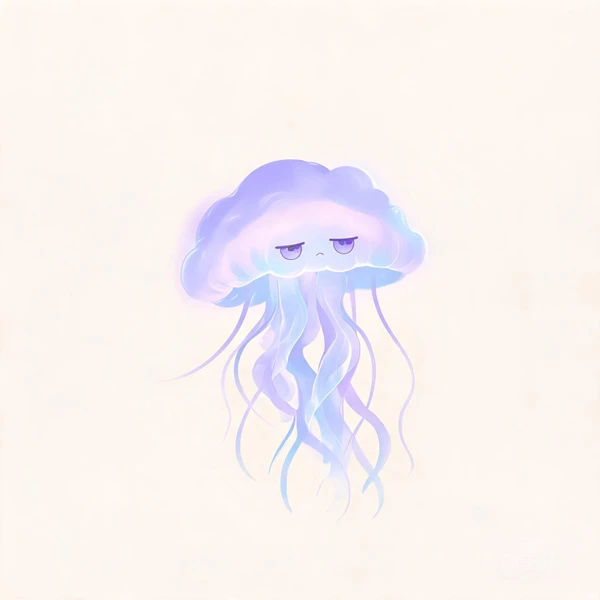
Cloud Jellyfish
The cloud jellyfish
Your Stress Profile

Cloud Jellyfish

Your stress is not loud, yet it soaks you like a tide: low drive, fuzzy memory, days sliding by. Its source is usually a long-term lack of control and immediate feedback, while the brain’s default mode network chews on vague unease when idle. This is not laziness but a life missing "clear small wins", dropping the dopamine baseline. The good news: it responds very well to the lightest tweaks.

Low drive Scattered Drifting
-- Reliability score
Reliability score

Your answers are consistent. The result is reliable.

Share your result

Share your result

Share your result with friends and see what their stress profile is.

Stress Radar

Dimension Scores

The radar shows your relative outline across five stress dimensions; the bars give specific scores. Higher scores mean that dimension needs more attention now.

Stress Radar

A larger outline biased toward one axis means that dimension stands out most in your current stress pattern.

Dimension Scores

Each dimension is scored out of 10; above 6 is worth making an adjustment priority.

Population proportion

See how your stress profile compares to the general population.

Cloud Jellyfish --

This means out of 100 people who took the test, roughly this many share your stress type. A smaller share means your pattern is more unique; a larger one means more people experience similar stress.

Core Traits

Your stress is not loud but soaks you like a tide. Below we explain the diffuse low-intensity stress and how to rebuild a sense of control.

🌫️Quiet overload

No panic, yet the days slide by; the load is chronic, not acute。Morning light calibrates the clock; daytime dopamine and alertness rise.

🌫️Few clear wins

Without visible small successes, the dopamine baseline drifts down。Real social contact is the strongest buffer against diffuse emptiness.

🌫️Idle DMN

The default mode network chews vague unease when there is no task to land on。Principle: action precedes motivation; the done-feeling seeds the next step.

Small, visible wins are the lever — not a big goal.

Your Strengths

Adaptive

You rarely freeze in panic, so you can act once a tiny step is clear。Morning light calibrates the clock; daytime dopamine and alertness rise.

Calm exterior

Others find you steady, which protects relationships under pressure。Real social contact is the strongest buffer against diffuse emptiness.

Open to ease

You are not wired for intensity, so gentle tweaks work well on you。Principle: action precedes motivation; the done-feeling seeds the next step.

Watch Outs

!Vague goals

Without a target the brain keeps grazing and never lands。Morning light calibrates the clock; daytime dopamine and alertness rise.

!Procrastination

Small tasks slip, big ones loom; inertia builds。Real social contact is the strongest buffer against diffuse emptiness.

!Night scrolling

Empty evenings get filled with stimulation that blunts the next day。Principle: action precedes motivation; the done-feeling seeds the next step.

Bedtime Rituals

🌅One small win

Pick one tickable thing each morning; finishing it lifts dopamine.

🌅Two-minute rule

Start anything in two minutes; momentum beats the "hard to begin" illusion.

🌅Screen curfew

Phone out of the bedroom; let the DMN quiet before sleep.

Sleep Hygiene

Calm practice

  • Same wake time anchors the rhythm.
  • Write tomorrow’s one win before bed.
  • No feeds in bed, less DMN noise.

Routine

  • Dim lights an hour before sleep.
  • Short stretch to drop the day.
  • Wake without snooze to protect mornings.

A steady rhythm is the anchor for a drifting day.

Daily Rhythm

Diet Tips

Recommended
  • Steady protein and complex carbs keep energy flat.
  • Omega-3 supports mood and focus.
  • Regular meals stop the fog of low blood sugar.
Limit
  • Skipping meals drops energy and will.
  • Too much sugar spikes then crashes.
  • Late heavy food disturbs sleep.

Even energy helps the drifting mind land on tasks.

Movement Tips

Recommended movement
  • A 10-minute walk breaks inertia cheaply.
  • Light aerobic wakes the frontal lobe.
  • Stretching relieves the held "zombie" tension.
Cautions
  • Do not wait for motivation; move first.
  • Avoid all-or-nothing workouts.
  • A short daily beat beats a weekly binge.

Motion before motivation; the body leads the mind.

7-Day Plan

<p>These 7 days are not about "getting better" but "getting moving". Use external structure to start for you and reconnect the dopamine circuit to tasks.</p>

Day 1

Micro-start

Pick the smallest task (reply one message) and do it now. Behavioral activation: action precedes motivation; the done-feeling seeds the next step.

Day 2

Morning light

15 min natural light after waking. Morning light suppresses melatonin and calibrates the clock - the cheapest boost to daytime dopamine and alertness.

Day 3

Single-task block

25 min one task, phone face-down. Cuts DMN rumination and lets the task-positive network take over so attention "sticks".

Day 4

Name the feeling

Write one sentence: what is this "empty"? (boredom/lonely/meaningless). Turning vague unease into a word lowers DMN activity.

Day 5

Move the body

Brisk walk or stretch 10 min. Exercise acutely raises norepinephrine and dopamine, lighting the "can't get going" engine.

Day 6

Tiny connection

Text one person you can be honest with. Real social contact is the strongest buffer against diffuse emptiness, even three sentences.

Day 7

Review anchor

Note which day you "moved a bit". Use facts against the "I did nothing" generalization to loosen the start-block.

4-Week Plan

<p>Monthly goal: shift from "pushed by others" to "running on your own rhythm", rebuilding intrinsic drive.</p>

1
Week 1

Fix a morning type

Same wake time + light for 7 days. Stable rhythm restores the cortisol morning peak and lowers the daytime start threshold。Principle: action precedes motivation; the done-feeling seeds the next step.

2
Week 2

Break down goals

Cut big tasks into "10-min finishable" chunks. Lowers start cost so the reward-prediction signal (dopamine) fires more easily。Morning light calibrates the clock; daytime dopamine and alertness rise.

3
Week 3

Fewer fragments

One phone-free, video-free hour daily. The gap lets the brain return from "fed passively" to "generating actively", DMN stops ruminating for you。Real social contact is the strongest buffer against diffuse emptiness.

4
Week 4

Meaning micro-practice

Note one "I did it and it mattered" small thing daily. Moves worth from outcome to process, loosening the "empty" baseline。Principle: action precedes motivation; the done-feeling seeds the next step.

Quick Resets

🎯Tick one

Finishing one thing breaks the drift fastest.

💪Step out

A two-minute walk resets attention.

Name it

Say the vague unease out loud; it shrinks.

Detailed Interpretation

Your stress is not loud, yet it soaks you like a tide: low drive, fuzzy memory, days sliding by. Its source is usually a long-term lack of control and immediate feedback, while the brain’s default mode network chews on vague unease when idle. This is not laziness but a life missing "clear small wins", dropping the dopamine baseline. The good news: it responds very well to the lightest tweaks.

The cloud jellyfish means your stress is quiet but soaks you like a steady tide. You rarely panic, yet constantly feel "can't get going", "can't remember", "days sliding by". This low-intensity diffuse stress is often misread as "lazy" or "no goal".

It usually comes from long-lacking control and immediate feedback: mechanical work, shallow social contact, fuzzy goals. The brain's default mode network (DMN) grows overactive when idle, making you chew vague unease without acting; the dopamine "wanting" signal is weak, so even starting is hard.

Common states

  • Attention scatters; mind wanders in meetings or reading
  • Small tasks postponed, big tasks endlessly delayed
  • Less interest even in things you used to enjoy
  • Phone-scrolling late, using stimulation to fill emptiness

What you get here

This result explains how DMN overactivity and low dopamine create the "empty", marks the line from depression, and offers behavioral-activation micro-starts — using external structure to boot you up rather than forcing "motivation".

Personalized Advice

Give the day one "visible small win"

The drifter’s antidote is not a big goal but a tiny tickable thing: today just "reply to one email" or "walk 10 minutes". Each completion releases a bit of dopamine and nudges the baseline up.

Use the "two-minute rule" against procrastination

Anything that can be started in two minutes, do it now; for bigger tasks, just do two minutes first. Action itself demagnetizes the "starting is hard" illusion and attention catches on more easily.

Keep the phone out of the bedroom

Night-time blue light and infinite feeds suppress melatonin and hype the DMN. Set a "screen curfew" and replace pre-sleep scrolling with a paper book or stretching; next-day clarity is noticeably different.

One "real connection" per week

Meet a friend or make a call instead of only texting. Shallow social contact does not feed belonging, while one quality conversation can markedly refill your sense of control.

A note from Bong

From the banks of the Xiao River, China

Looking at your result, I am reminded of a line: "Those who drift are not rootless; they just have not found the moment to land." Try one or two of the suggestions above, not all. Allow yourself to slow down; landing will happen.

Bong's note is based on personal observation and experience, for self-exploration only. It is not medical advice.

Let AI guide you

Copy the prompt below and paste it into ChatGPT, Claude or any AI assistant to take the quiz conversationally.

Page navigation5baba.com