Let's clear up two myths right away. First, qigong is not mystical, and it's not a "secret energy art." It's a gentle, slow practice that combines breathing, posture, and attention — think of it as stretching with breath, or standing meditation. Second, you don't need any experience or a big space. Your living room floor is enough. This article is written for absolute beginners.
This article is for wellness education and self-care. It is not medical advice. If you feel persistent dizziness or chest tightness during practice, stop and consult a doctor.
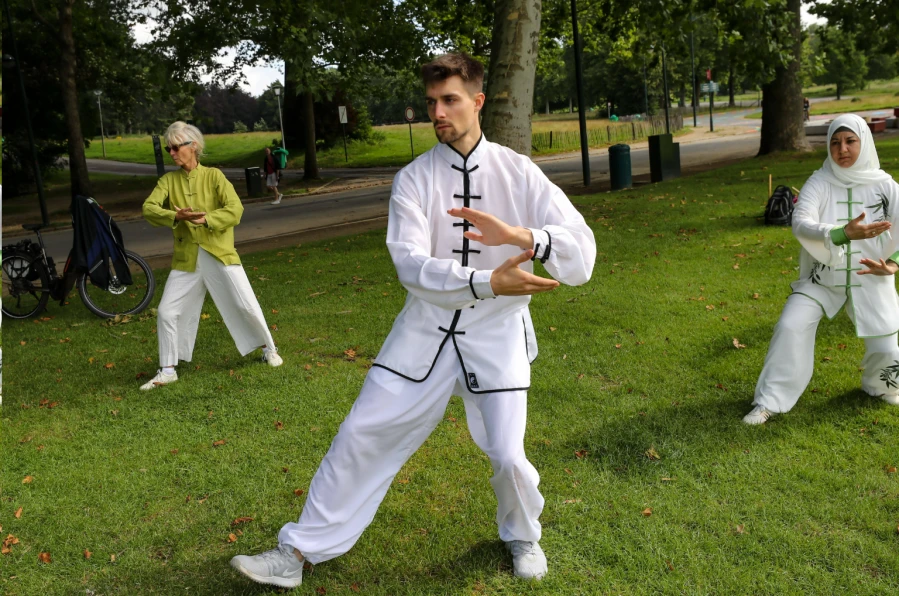
What Qigong Actually Is
Split the word and it explains itself: qi — the breath and the sense of flowing energy in your body — and gong — daily practice. Together: using breath and posture to bring your body into a relaxed, aware state. No complicated rules. Three words: slow, loose, even.
In TCM terms, qi moves blood, and blood nourishes the body. Think of qi as your body's power grid and blood as the delivery trucks — when the grid flows smoothly, deliveries run on time. Qigong's slow movements train exactly that flow.
What the Character "Qi" Hides
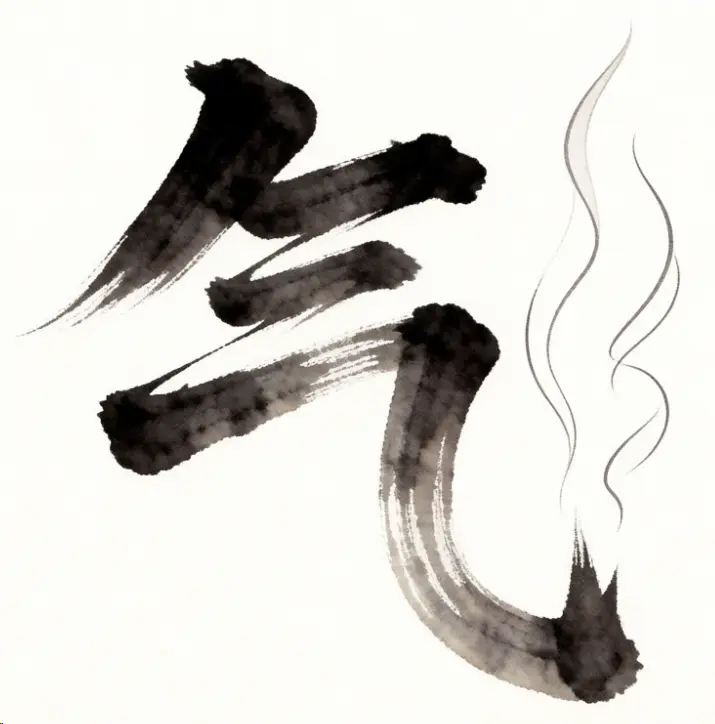
Chinese characters carry their history. The earliest form of "qi" (气) is a picture of three wisps of rising steam — cloud, breath, the invisible-but-real things that flow. Ancient writers used "qi" for everything unseen, real, and moving.
Suddenly many phrases make sense: "short of qi" means breathing shallowly, low energy; "good qi color" means a bright, healthy complexion; "qi flowing smoothly" means unwinding from stress. Qigong trains that flow — with breath, posture, and attention.
Jing, Qi, Shen — in Plain Terms
TCM sorts your body's fundamental resources into three layers called jing, qi, and shen. In modern terms:
- Jing is your baseline — partly inherited, partly topped up by sleep and food. Like your phone's battery health.
- Qi turns jing into daily energy, warmth, and immunity. Like the electrical current.
- Shen is awareness and focus — thinking clearly, sleeping well. Like the operating system.
Qigong doesn't train one layer; it gets the three to cooperate. Breath smooths qi, smooth qi protects jing, and a quiet body lets shen return. That "clear head, loose body" feeling after practice isn't mysticism — it's your nervous system shifting from alert to rest.
Qigong, Tai Chi, Baduanjin: Don't Confuse Them
These three names get lumped together all the time. They're one family, different branches:
| Name | Character | Best for |
|---|---|---|
| Qigong | Standing, breathing; few, still movements | Absolute beginners wanting relaxation and focus |
| Baduanjin | Eight fixed sequences, clear rhythm | People who like structured, easy-to-remember sets |
| Tai Chi | Continuous forms with martial roots | People who want to learn a complete, flowing form |
All three share the same foundation — "intention leads qi, qi moves the body." If you read the Baduanjin guide first, you'll notice many of the same feelings here — qigong is just stiller, and baduanjin has more movement.
A 10-Minute Routine for Absolute Beginners
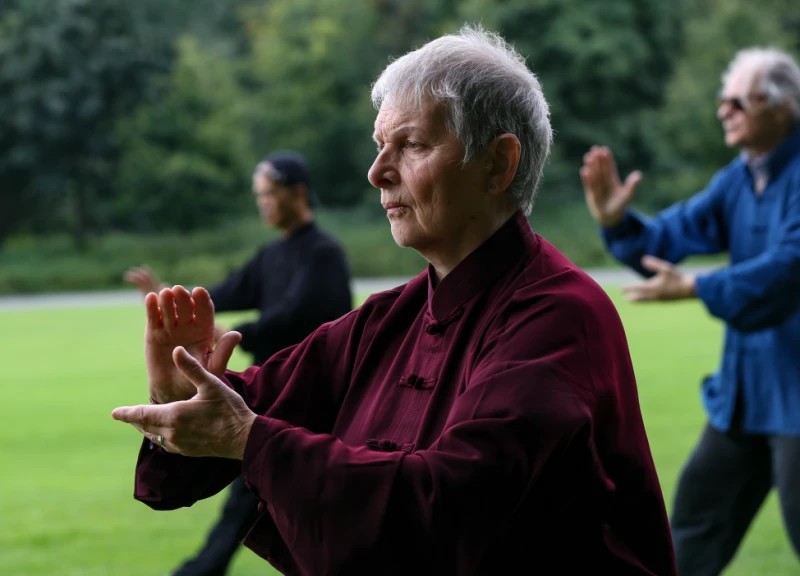
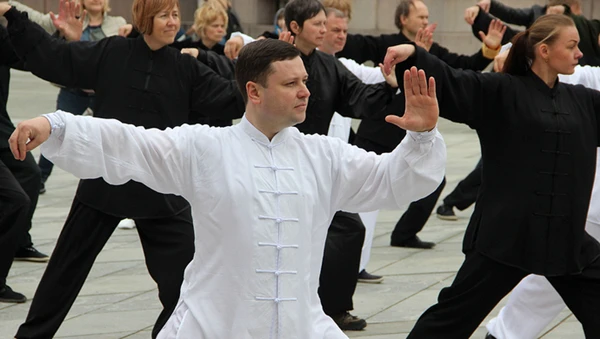
No equipment needed — just enough space to stand. The whole thing is about 10 minutes. Wear loose clothes; practice on an empty stomach or an hour after meals:
Breath: The Engine of Qigong
Breath is qigong's engine. It asks three things of your breathing: deep (down to the belly), slow (about 6 breaths a minute), and even (inhalation and exhalation matched). If that feels foreign at first, practice belly breathing for a few days first — once your belly "bounces," returning to qigong movements feels natural.
When you're stressed, your breath gets shallow. Do the reverse — slow the breath down, and the body gets the message: "safe to relax." Qigong trains exactly this reverse switch.
For a more structured rhythm, try 4-7-8 breathing — inhale 4, hold 7, exhale 8. It's especially helpful before bed, and it makes a fine warm-up for qigong.
Three Common Misconceptions, Defused
A Note from Bong

When I was a boy, the neighbor grandfather stood in his yard every morning, half an hour at a time. I thought he was wasting time. Later I understood: it was the only half-hour of his day that belonged entirely to him — no rushing, no competing, just being with himself.
You don't need his half hour. Ten minutes a day, phone off, shoulders down — give yourself a stretch of time that isn't hurrying anywhere. Those ten minutes, saved up, are the best investment you can make in your body.
AI Assistant: Build Your Own Qigong Starter Plan
References
- Huangdi Neijing, Suwen: "Calm and empty, and true qi follows" — on stillness and nourishing qi.
- NCBI systematic reviews on qigong and stress/anxiety intervention.
- WHO Traditional Medicine Strategy (2014-2023), traditional practice and wellness.
- Chinese Health Qigong Association materials on Baduanjin promotion.
FAQ
Partly. Research supports that slow breathing activates the parasympathetic nervous system and reduces stress, and that gentle movement improves balance and sleep. As for "qi" itself, the most honest framing is "the overall state of a relaxed, focused body" — not a substance that needs proving.
For beginners, 10-15 minutes a day is enough — consistency is what matters. Stop at "loose and clear," don't chase duration. On an off day, five minutes beats skipping entirely.
Aching legs are normal at first as your lower-body muscles adapt to static standing — shorten the session if needed. Dizziness usually comes from breathing too fast or dropping your head; relax your shoulders, slow your breath, and look ahead. If it persists, stop and consult a doctor.
Meditation is usually seated and mind-focused; qigong works with breath inside slow movement, which can be friendlier for people who struggle to sit still or feel stiff. Both aim at relaxation and awareness, and they pair well together.
Check Your State
Where are your body and mind right now?
A few minutes of self-assessment to find the source of your tension and fatigue.
Start the quiz