Not long ago, Xiao Liu, the night-shift clerk at the shop downstairs, said something to me that stuck: "I open my eyes at 2:40 in the morning, like clockwork." It wasn't an addiction to staying up — it was worry. His mother-in-law had a thyroid nodule removed last month, the scar barely healed, and he couldn't bring himself to tell her the household purse was nearly empty. During the day he was too busy to think about it. But your body is the most honest accountant there is: you can hide things from everyone but not from it. At the one hour nobody else is watching, it lays out, one by one, the things you can't put down. This piece stays down-to-earth and clears up two things at once: why "2 or 3 a.m." specifically, what to actually do the moment you're awake — and when the right move is to see a doctor.
1. Who hands the shift over to you at 2 or 3 a.m.
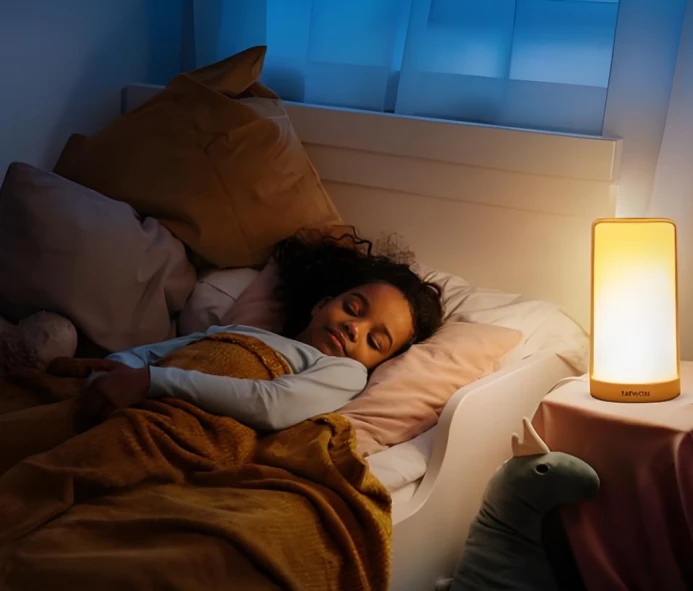
First, relax about one thing: waking at night, in itself, is nothing unusual. Across a night of sleep you move through several cycles of light sleep, deep sleep and REM, and each cycle tends to end with a brief moment of wakefulness — most of the time you barely register it and simply roll over and drift back off. What truly gnaws at you isn't the waking, but waking and not being able to get back to sleep / waking every time with a load of worries on your chest.
To see why it's "2 or 3," you should first meet the night's "shift workers." Each has their own beat, and at a certain hour they clock in and swap —
2. Why "2 or 3," and not 11 p.m.
On the character for "awake": sleep is "gathering in," the small hours are "letting out"
Across a day there are one or two hours when the body starts to turn from "sleeping, gathered in" toward "getting ready to wake." Around 2 or 3 a.m., cortisol begins climbing from its overnight low to get you ready for the day ahead — that in itself is a good thing. But if you've been wound tight all day, that "alarm" gets tripped early: it thinks it's time to hand over the shift, when dawn is still a long way off. That's why waking at this hour is often not a broken body, but a body that has lumped "the thing I must face tomorrow" together with "the clock that should be working now."
Worse still, this hour "remembers" you. Wake at 2 or 3 a.m. for a few weeks running and the body writes the time into its own schedule — powering on automatically at the same moment. That's exactly what Xiao Liu meant by "like clockwork."
3. Don't fight it the moment you're awake: three first moves
The harder you will yourself to "get back to sleep," the less it works — because the moment you clench, cortisol jumps up and you feel even more awake. In that 2 a.m. instant, don't brace against the body; loosen your hands, feet and breath first:
Three practical "get up without regret" moves
① Don't grab your phone or check the time — the more you look, the more you're "clocking in," the more awake you get; ② throw open a corner of the duvet and let your hands and feet cool down — as your core temperature drops, sleepiness is more likely to find its own way back; ③ if you truly sit up, throw on a cardigan, go warm some water and take a few steps — a hundred times better than lying there blaming yourself.
Then add a round of "slowing the breath" to take the edge off: follow the ring below and breathe in for 4 seconds, hold for 7, exhale slowly for 8 — after two or three rounds, let your "on-duty" body know: this isn't clocking in, it's the hour to put your head down.
Not sleeping isn't failure — it's your body that hasn't clocked out yet. It's got the words all lined up, just waiting for you to listen once.
If slow breathing feels hard to get the hang of, follow Diaphragmatic breathing: the simplest stress-relief and the 4-7-8 method — a few minutes is enough to push that "floating alertness" back down a notch.
4. Defuse the "middle-of-the-night play" in daylight: four fuses
The play at night is mostly staged during the day. If you want to wake less at this hour, the work is best done in sunlight — four fuses, pulled one by one:
Ask yourself once
The moment your eyes open at 2 a.m., what flashes into your head — tomorrow's meeting, that sentence you never said, or simply "why am I awake again?" That answer usually points straight to the row above that fits you.
Three fuses you can pull in the daylight
① Give the worry an outlet: if you bottle it in, write it down — speak it clearly in the day and you won't need to "re-run the episode" at night; ② cut caffeine after 2 p.m., and milk tea, cola and strong tea are all on the list — stop three hours before bedtime at the latest; ③ settle the "should I sleep" worry early by setting a fixed bedtime — no alarm, no repeatedly glancing at the clock.
Stress you can't digest in the day is the kind that "works overtime" at night — for the specific how-to, look back at Cortisol and chronic stress: how your body works overtime for you at night and let out the "daytime breath" one step earlier, so you don't have to stand guard after dark. And if you find yourself "waking on schedule then getting more alert," treat it as "not yet learned to sleep well" rather than slapping the label "insomnia" on yourself — Can't sleep? A complete non-drug guide to falling asleep lays out a more systematic approach.

5. Three midnight signals you shouldn't tough out
Most 2 or 3 a.m. awakenings improve with better routines, an emotional outlet and relaxation. But the ones below are your body raising a serious alarm — if they fit, see a doctor rather than leaning on a popular-science article:
Stop "toughing it out" and let a sleep clinic sort it out — this isn't a matter of willpower.
This may not be a mindset issue but a sleep-breathing signal — genuinely worth checking.
Then don't wait for daylight — seek care promptly. This isn't something that "white-knuckling through the night" will fix.
Ask the person beside you: is what you lack sleep, or a worry you can't set down
FAQs
Waking at the same hour is usually not a sign of "something wrong" but a body that has set a clock: an early morning cortisol rhythm, daytime emotions with no outlet, or a combination of bedtime caffeine and alcohol can all lift you out of sleep at a fixed point in the second half of the night. Mostly it's an "adjustable rhythm" — no need to scare yourself. But if it comes with snoring and breath-holding, palpitations or chest pain, or simply sleeping badly for a long time, that's when you go and get it sorted out.
Don't force yourself to stare at the ceiling — that makes you more alert and binds the idea of "bed" to "being awake." Instead, sit up, drink some water, throw on a layer and walk a few steps, do two rounds of slow breathing to press the "on-duty" alertness down, then lie back. If you're still alert after twenty minutes, just get up and do something quiet (no phone), and go back when you feel sleepy — far better than lying there feeling guilty.
Caffeine has a long half-life; the usual advice is to stop after mid-afternoon (around 2 p.m.), and milk tea, cola and strong tea all count. As for alcohol: it pulls you under at the start, but a few hours later it metabolizes and can "rebound" and pop you awake in the second half of the night — the people who fall asleep "with a drink" are often the ones who wake hardest that night. Don't trade a drink for the first brief stretch of depth.

A word from Bong

Your body doesn't care whether you're paying attention; it only cares about the hour. The day's business loves to come and settle its accounts in that quiet small-hour stretch, all by itself.
The harder you rush back to sleep, the more it seems you're arguing over the floor. Listen a little, accept it, don't take a bow — leave the rest for the dawn.
Sources
- Sleep Foundation. Stress and Insomnia. How stress disrupts sleep and why you wake in the small hours.
- Mayo Clinic. Insomnia — Symptoms and causes. Types of insomnia, symptoms and the signs that call for care.
- American Psychological Association. Stress effects on the body. An overview of stress on the body, especially sleep.
Is what you lack sleep — or a worry you can't set down?
A fresh sleep self-check: in 3 minutes, tell apart "not enough sleep" from "sleep that won't settle" — then get a matching direction to adjust.
Take the sleep-quality self-check