Oily skin, recurring breakouts, a bitter taste in the mouth, sticky stools, and a temper that runs hot — string those together and many people land on one guess: "maybe I have too much damp-heat." The damp-heat constitution is one of the most visible of the nine TCM constitutions, because it shows up on your face. But what is damp-heat, really? And why does it fear heat just like yin deficiency does, while needing the exact opposite care? This article lays the damp-heat constitution out clearly, including the three traps people fall into most. A cultural lens on TCM — not a diagnosis.
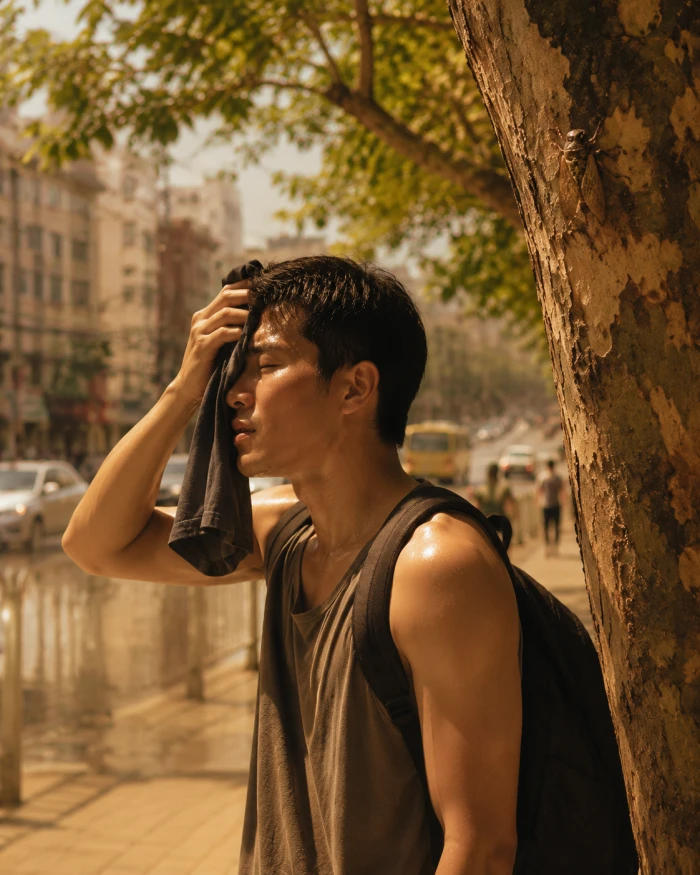
What is damp-heat: when dampness meets heat
Damp-heat splits into two words: damp (fluids the body can't move — sticky, heavy) meets heat (a fire that runs hot inside). Damp is "sticky"; heat is "burning" — put wet wood in a stove and you don't get a clean flame, you get thick smoke. TCM describes this state as "like oil mixed into flour" — hard to pull apart.
That explains the two faces of damp-heat: first, "steaming up" — heat pushes damp upward, so you get an oily face, a foggy head, breakouts; second, "sticking down" — damp-heat settles low, so stools are sticky and unsatisfying, urine is scanty and yellow, and the lower body tends to feel clammy. Grease on top, stickiness below — squeezed from both ends.
Typical signs of the damp-heat constitution
- Oily face and T-zone; recurring breakouts, itchy skin
- Bitter taste and dry mouth, heavy breath — especially in the morning
- Sticky stools that are hard to flush, strong odor
- Dark, scanty urine, sometimes with a burning feel
- Heavy body, easily irritated, afraid of heat, sticky sweat
- For women: yellowish, thick discharge; for men: dampness in the lower body (signs of damp-heat settling downward)
To be clear: these are clues to a tendency, not a diagnosis. A TCM practitioner weighs tongue (red with a yellow-greasy coating) and pulse together.
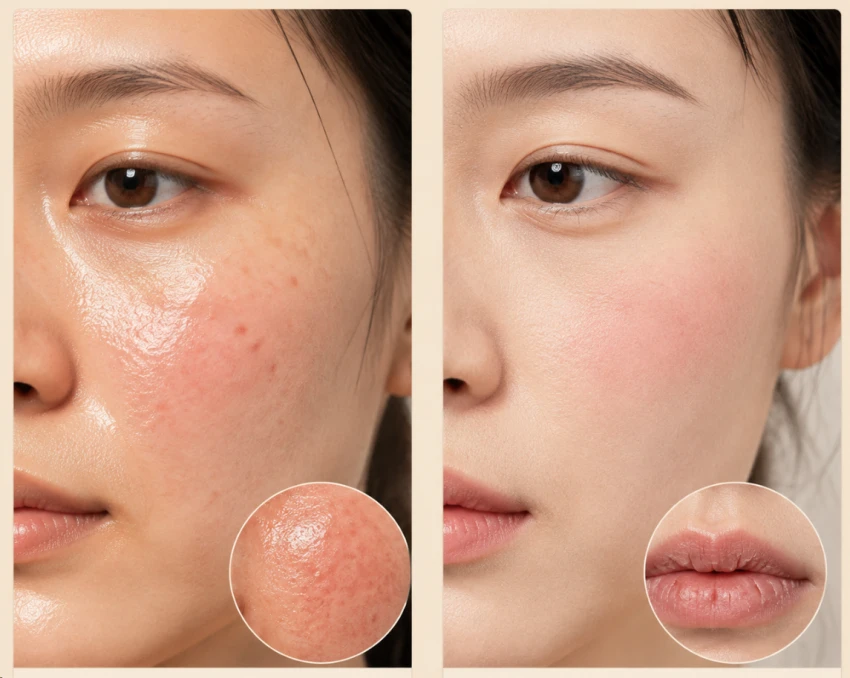
Damp-heat vs. yin deficiency: both fear heat, opposite directions
Fears heat, with "oil, stickiness, bitter mouth, irritability"
Essence: "too much" — damp and heat both in excess
Care: clear and drain, direction is "subtract"
Tongue: red, yellow-greasy coating
Fears heat, with "dryness, night sweats, heat in palms and soles"
Essence: "too little" — fluids run low
Care: nourish and moisten, direction is "add"
Tongue: red, little or no coating, maybe cracks
This contrast is the most important lesson in damp-heat care: two states both "run hot," but one needs clearing and the other needs nourishing — the directions are exact opposites. Use the wrong one and you'll dry out the yin-deficient person with clearing herbs, or clog up the damp-heat person with nourishing ones. If you're not sure which side you're on, the TCM constitution quiz is a great first step (see TCM Constitution Test).
Why damp-heat happens
- Eaten in: rich, greasy, spicy food plus alcohol — these "brew damp and generate heat." Spicy hotpot washed down with iced drinks is how a lot of damp-heat gets banked.
- Bottled up: chronic late nights and suppressed stress. TCM says "stagnant qi turns to fire" — pressure held inside is one source of the heat.
- Environment in: living long-term in hot, humid regions, or working in muggy, airless spaces — external damp stirs up internal damp.
One overlooked detail: the iced-drink paradox — a cold drink goes in, and the body has to heat it from 0°C to 37°C to digest it, and that process itself "generates heat"; meanwhile the cold suppresses the spleen's transport, so damp can't leave. The more iced drinks, the more "wet and hot" you get. It's why many damp-heat people feel stickier and stickier in summer.
How to adjust (1): lighten the diet
The food keywords for damp-heat are "light, drain damp, clear heat" — the point is to lighten the load:
| Category | Eat more | Eat less / avoid |
|---|---|---|
| Heat-clearing, damp-draining foods | Winter melon, mung bean, adzuki bean, coix seed, bitter melon, cucumber | Fried food, barbecue, fatty meat |
| Bitter vegetables | Bitter melon, celery, lettuce, dandelion leaves | Pickled, heavily seasoned food |
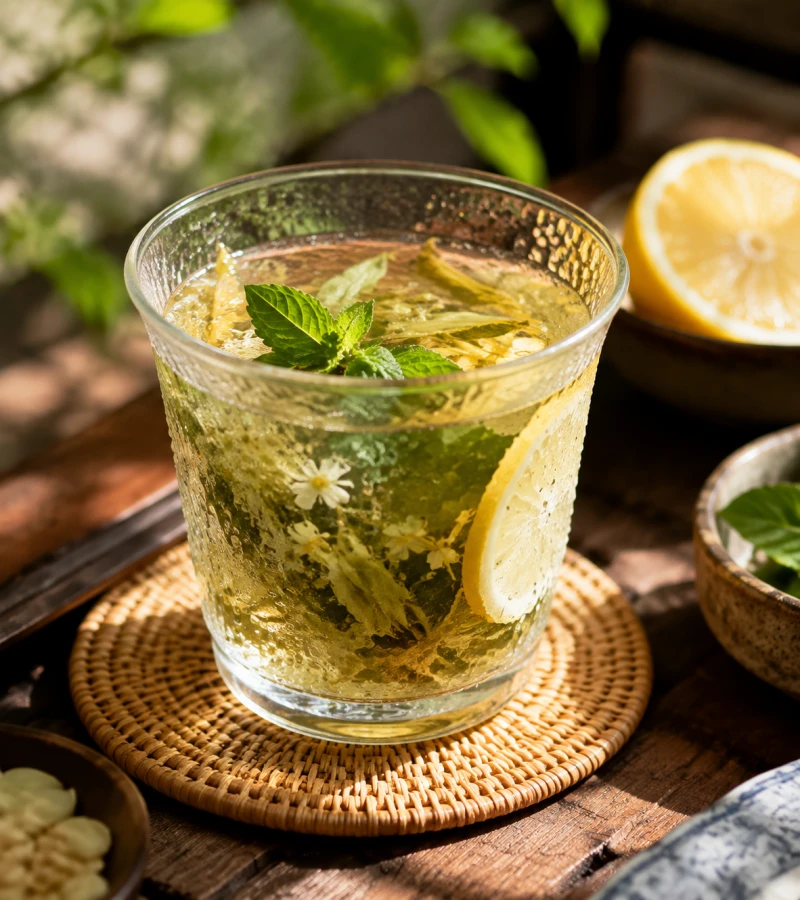
| Teas | Chrysanthemum tea, honeysuckle tea, bamboo-leaf water | Sugary drinks, strong coffee |
| Staples | Brown rice, corn, millet | Sweets, glutinous rice |
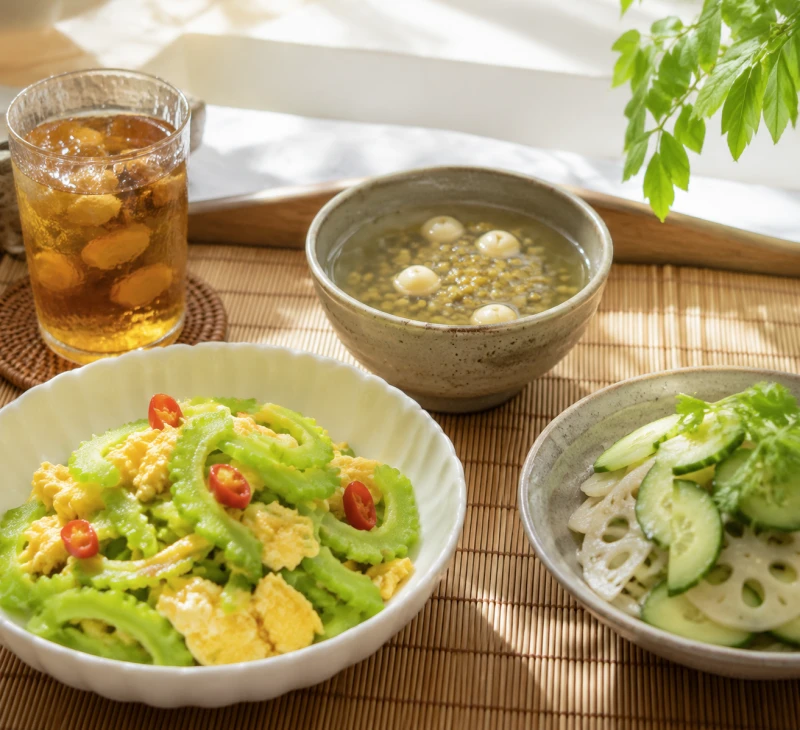
A typical "damp-heat meal": mung-bean soup or winter-melon soup as the liquid, stir-fried bitter melon with brown rice, and a cup of chrysanthemum tea after — bitter melon clears heat, mung bean drains damp, chrysanthemum clears the liver. All of it lives in a summer kitchen.
How to adjust (2): routine and environment
Damp-heat types need rhythm most: regular sleep is the liver's "clearing" time — TCM says "the liver governs free flow," and staying up late wounds the liver qi most; when liver qi stalls, it turns to fire and breeds damp. Aim for lights-out around 11 p.m. and seven hours of sleep — it matters more than any herbal tea.
On environment: don't linger in "steam-bath" places — saunas, muggy rooms, damp basements. Exercise in the cool morning or evening hours, and aim for a light sweat — sweat is the outlet for damp-heat, but heavy sweating drains qi and wounds yin.
The three traps
This is the most dangerous mix-up. Damp-heat and yin deficiency both fear heat, but one needs clearing and the other needs nourishing. Blindly taking yin-nourishing tonics (the direction of things like donkey-hide gelatin, snow fungus, liuwei dihuang) will "clog" damp-heat even worse. If you can't tell them apart, take the quiz before you "nourish" by feeling.
Most cooling herbal teas are strongly cold-natured. In the short run they put out the fire, but drinking them hard for months wounds the spleen — and a wounded spleen drains damp worse, making the damp-heat more stubborn. Cooling tea is a fire extinguisher, not a daily drink.
Coix seed is cooling and adzuki drains damp, but damp-heat isn't just damp — without the "clear heat" step, you're draining damp while the fire still burns. And for anyone with a cold-deficient spleen, long-term cooling "damp drinks" will drink the spleen into weakness.
Beyond recurring breakouts and a bitter mouth: if you also have clear fatigue, yellowish eyes or urine, or stools that turn pale or black, see a doctor soon — these can signal liver or metabolic problems, not something to manage as "just damp-heat."
FAQ
Yes, but watch the timing and frequency. When damp-heat is obvious and the tongue coating is yellow-greasy, short-term use is fine (honeysuckle, chrysanthemum, bamboo-leaf direction). As a daily drink it's not advised — long-term cold wounds the spleen, making damp harder to clear.
Look for "dry" vs. "greasy": yin deficiency leans dry (dry mouth, dry skin, night sweats, red tongue with little coating); damp-heat leans sticky (oily skin, bitter mouth, sticky stools, yellow-greasy coating). One needs nourishing, the other clearing — opposite directions.
Low-to-moderate aerobic exercise in cooler hours: brisk walking, swimming, morning jogging, baduanjin qigong — aim for a light sweat. Avoid intense exercise in muggy environments and heavy sweating.
From the TCM view, iced drinks suppress the spleen's transport and deepen damp stagnation, and the body burns extra "heat" just to warm them up — so damp-heat types often feel stickier the more they drink iced. Warm or room-temperature is kinder.
A Note from Bong

People keep asking me how to "put out the fire." My father never talked that way. When he weighed out herbs, he'd say: fire isn't something you press down — it's something you stop feeding. Stop adding wood, and it shrinks by itself. Damp-heat is the same. Don't go hunting for the extinguisher; first look under the stove and ask whether you've thrown another log on.
References
- Wang Qi et al.: Constitutionology of TCM (nine-constitution classification and criteria).
- China Association of Chinese Medicine: TCM Constitution Classification and Determination (ZYYXH/T157-2009).
- TCM basic theory textbooks: the nature of damp and heat pathogens, and damp-heat binding.
- Acne and diet/metabolism research in modern dermatology (as a parallel to the "oil and breakouts and diet" view).
Are you damp-heat, or yin deficiency?
Both constitutions "fear heat," but their care runs in opposite directions. Take the standard TCM constitution quiz and tell damp-heat, yin deficiency and qi deficiency apart — stop "clearing" or "nourishing" by feeling.
Take the TCM constitution quiz