Have you noticed that you wake up more easily in spring than in winter? That your appetite fades in summer, that autumn makes you want to tidy your wardrobe, and that in winter you simply want to stay in bed? In the view of Chinese medicine, this is not coincidence — your body is keeping time with the five elements' "seasonal clock": Wood governs spring, Fire summer, Earth late summer, Metal autumn, and Water winter. Following the seasons simply means giving your body the right rhythm. The following is compiled from public TCM theory and literature and is not medical advice.
Why the Five Elements Map to the Seasons
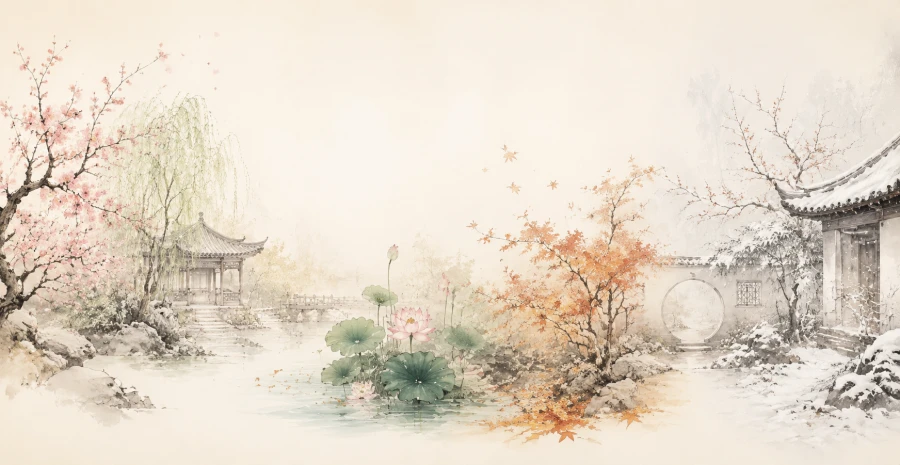
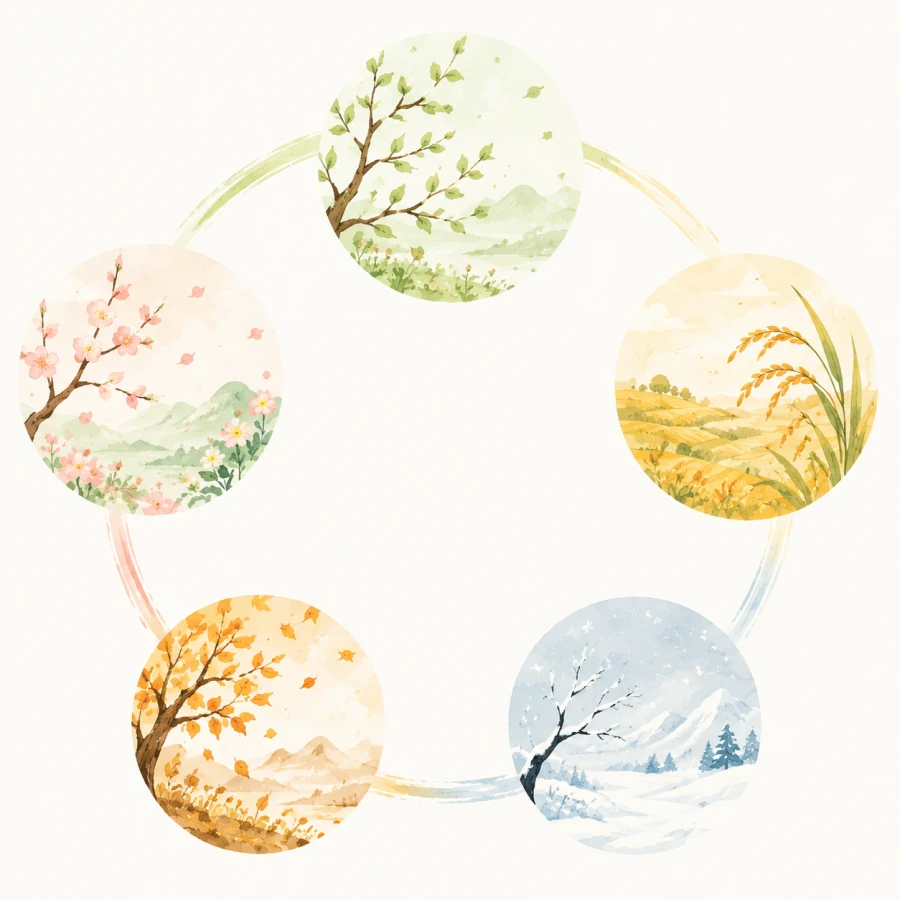
The five elements of Chinese medicine are not abstract symbols; they are a method of observation that sorts similar qualities of the world into the same element. The seasons are the most intuitive example — in spring everything sprouts, humming with the same rising energy as "Wood"; summer is hot and lush, the look of "Fire"; late summer, when dampness peaks and crops ripen, belongs to "Earth"; autumn, when leaves fall and energy draws inward, to "Metal"; and winter, when all things lie dormant, to "Water".
Behind this mapping is a simple idea: human beings are part of nature, and the body's vital energy rises and falls with the rhythm of the seasons. In spring, yang energy rises, so you should move more and stretch; in winter, yang energy hides deep, so you should do less and rest more. Fighting the season — staying up late and seeking cold in winter as if it were summer — is, in TCM thinking, "draining your root energy," which is why "winter illnesses" so often flare up in winter.
To be clear: this theory is an ancient model of how body and nature relate, not a modern scientific conclusion. But the direction it points — adjusting your routine and diet with the seasons — matches the findings of research on circadian rhythms and seasonal affective disorder. As everyday wisdom, it holds up.
Spring · Wood: Growth, Waking the Body Up
Spring belongs to "Wood" and corresponds to the liver. Wood's character is growth, expansion, upward movement — trees sprout in spring, and in spring people should bring out the energy they tucked away in winter. TCM says "spring brings growth," meaning yang energy should rise and unfold, like a plant breaking through the soil.
The famous "spring drowsiness" is, in TCM terms, usually the body still stuck in winter's "storing" mode, with rising energy not yet flowing smoothly. The fix is not more sleep but waking the yang energy through movement: getting up early, stretching, brisk walks, going outdoors — these are the movements Wood loves. For food, spring favors the "rising" kind: leafy greens, sprouts, scallions and ginger, which suit spring far better than heavy meat.
Spring belongs to Wood and the liver. The key is to move, stretch, and wake the body from its winter sleep.
Summer · Fire: Full Bloom, with Restraint
Summer belongs to "Fire" and corresponds to the heart. Fire's character is heat, abundance, outward energy — this is the season of the strongest yang, when people tend to feel restless, sleep later, and socialize more. TCM says "summer brings growth" and encourages living fully, while also warning: fire that burns too hot can injure the spirit.
Summer's classic complaints: restlessness, poor sleep, dry mouth, a tendency to feel "heated." Modern life adds cold drinks, air conditioning, and late nights — fuel on the fire of the "heart." The wise response is to "nourish the heart": a short midday rest to recharge the mind; an evening walk instead of scrolling your phone; and restraint with cold drinks — ice-cold refreshment feels great, but TCM sees it as "cold congealing" that can leave you more tired in the muggy heat.
One more thing: summer's "fire" and late-night phone scrolling make a perfect bad team — the later you stay, the more wired you feel, and the more wired you feel, the later you stay. Pushing your latest bedtime back by just half an hour does more than any "cooling" remedy.
Late Summer · Earth: Transformation, Prime Time for the Spleen
"Late summer" means the dampest stretch between summer and autumn (roughly July and August), corresponding to "Earth" and the spleen and stomach. Earth's character is bearing, transforming, centering — the soil turns seeds into grain, and the spleen turns food into qi and blood. TCM says "nourish the spleen in late summer" because this damp season puts the spleen's transforming power to its hardest test.
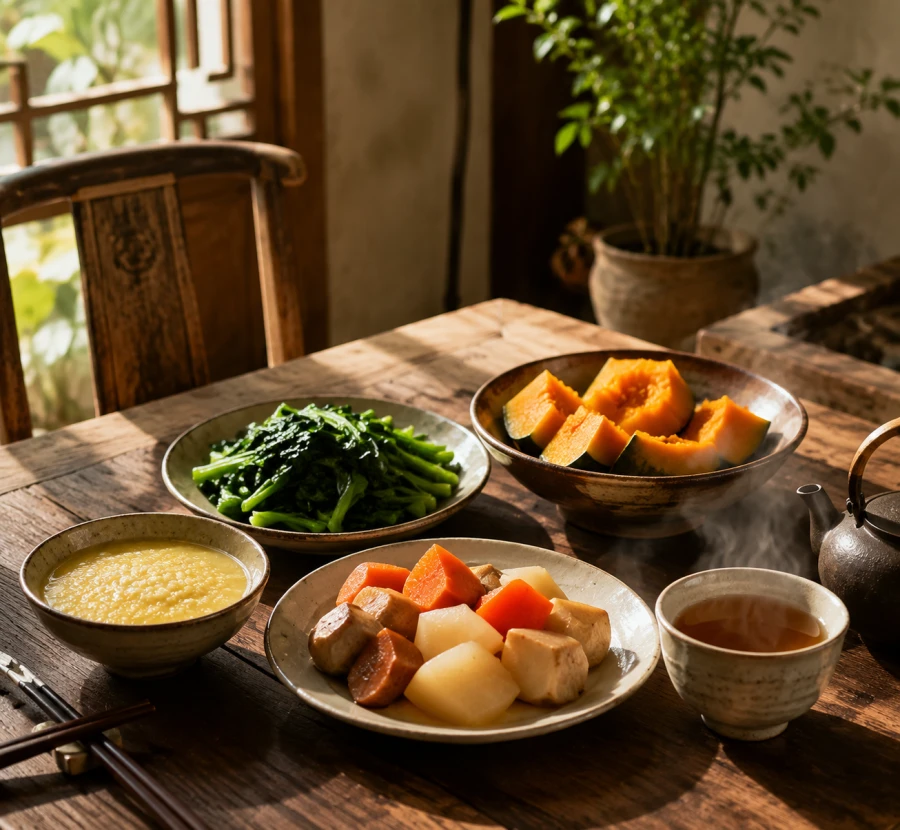
People prone to dampness suffer most in late summer: heavy body, no appetite, sticky digestion, never feeling rested. The remedy is to "strengthen the spleen and drain dampness": keep food light, cut back on greasy and cold dishes; favor spleen-friendly staples — millet, yam, lotus seed, pumpkin; and take a short walk after meals instead of collapsing on the sofa. When the spleen is happy, dampness dissolves on its own.
The observation that "late-summer dampness weighs on the spleen" points in the same direction as modern medicine's finding that hot, humid conditions can slow digestion and cut appetite. Anyone who has lived through the hottest weeks of summer knows the feeling.
Autumn · Metal: Gathering In, from Busy to Quiet
Autumn belongs to "Metal" and corresponds to the lungs. Metal's character is contracting, descending, clarifying — leaves fall, fruit is stored, and everything turns from outward expansion to inward gathering. TCM says "autumn brings harvest," reminding us to draw back the energy that summer scattered so freely.
Autumn's signature problem is dryness: dry mouth, dry skin, a scratchy throat, easy coughing. The lungs love moisture and hate dryness, so autumn dryness tests them directly. The response is to "moisten the lungs": drink more water (warm is better), eat white moistening foods — pear, lily, white fungus, lotus root; and since the days and nights differ sharply, keep your neck and upper back warm, the pathway of lung qi. Autumn is also a good season for quiet, gathering pursuits: reading, sitting still, tidying — slowly closing the door on summer's noise.
Winter · Water: Storing, Keeping Energy Deep
Winter belongs to "Water" and corresponds to the kidneys. Water's character is hiding, stillness, depth — all things rest, and energy is stored deep underground. TCM says "winter brings storage," the season that most stresses the act of storing: the deeper your yang is stored, the stronger your growth can be next spring.
Winter's way is, above all, "do less": go to bed early and rise later (following the sun), cut back on vigorous exercise (heavy sweating "leaks" yang), and keep your lower back, abdomen, and ankles warm — the kidneys govern the lower back and knees, and cold creeps up from the feet. Food should be warm and nourishing — soups, porridges, root vegetables — to "stock the pantry" of the body. Winter is also the classic season for tonics, but TCM holds that "tonify what is deficient": if you are not deficient, don't force a tonic — if the spleen cannot transform it, the supplement just becomes a burden.
A Four-Season Self-Check Table
| Season | Element | Organ | Do | Don't |
|---|---|---|---|---|
| Spring | Wood | Liver | Rise early, move, stretch, eat leafy greens | Lie in, sit all day, lose your temper |
| Summer | Fire | Heart | Nap, walk, eat light | Stay up late, binge cold drinks, overdo emotions |
| Late summer | Earth | Spleen & stomach | Millet and yam, walk after meals, less grease | Chill-seeking, overeating, sofa-slumping |
| Autumn | Metal | Lungs | Moisten dryness, white foods, protect neck and back | Dry heat, staying up, sinking moods |
| Winter | Water | Kidneys | Early to bed, warm tonics, stay warm | Heavy sweating, late nights, cold ankles |
One note on self-checking: this table is a directional reference, not a prescription. If you have real discomfort — persistent cough, insomnia, lasting fatigue — see a doctor first; don't rely on "following the seasons" alone.
Five Everyday Ways to Follow the Seasons
Bringing seasonal wisdom into daily life needs no ritual; five small habits are enough:
- Follow the sun: rise early in spring and summer, a little later in autumn and winter; all year round, don't stay up far past your usual bedtime.
- Eat what's in season: sprouts and greens in spring, light food in summer, millet and yam in late summer, moistening food in autumn, warm nourishment in winter. Seasonal food is the best "seasonal prescription" there is.
- Move appropriately: stretch in spring, light exercise in summer, gentle in autumn, restrained in winter — the intensity of your movement should follow the season too. In winter, don't chase a drenching sweat.
- Protect three places: the neck (lungs), the belly (spleen and stomach), and the ankles (kidneys). Keeping these three warm year-round is the most practical protection.
- Let your emotions change season too: go out more in spring, don't overdo the high in summer, gather your mind in autumn, and give yourself more quiet time in winter. When moods follow the seasons, the body feels lighter.
"Living with the seasons" is everyday wisdom, not a treatment plan. When the body is persistently unwell, proper medical care always comes first — the two don't conflict.
FAQ
The five elements are an ancient model of how body and nature relate, not a modern scientific conclusion. But the direction it points — adjusting sleep, eating, and activity with the seasons — aligns with research on circadian rhythms and seasonal affective disorder. Treat it as life wisdom, not physiology.
Traditionally it is the dampest stretch between late summer and early autumn (roughly July and August); some schools say it is the last eighteen days of each season. For daily life, think of it as "the muggy tail of high summer," when the spleen and stomach deserve extra care.
You absolutely can — the point is not to sweat heavily and "leak" energy. Exercise in winter at moderate intensity, aiming for a light sweat, and warm up properly afterward.
Wood-leaning people do feel "wilder" in spring — more active in mind and body, and quicker to get worked up. Once you know your dominant element, you can be extra mindful in its season. To find out which element you lean toward, take the Five Elements Personality Quiz: Which Element Are You?.
A Note from Bong
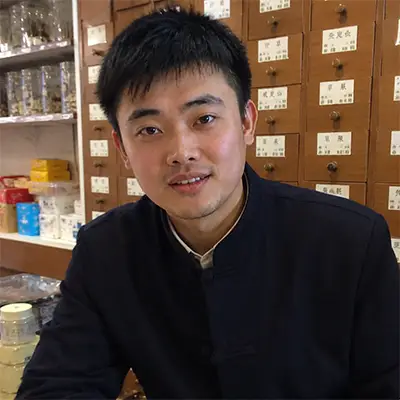
When I was a child, I lived in the courtyard behind my family's pharmacy. Every year on the first day of spring, my father would fling the courtyard gate wide open and say, "Let the wind in — let the yang in." I thought it was funny. A gate, how mystical could that be? It took years of working in the pharmacy to understand: he wasn't opening a door, he was changing the season for the whole household. The windows shut all winter, the bodies curled in on themselves, the moods held tight — when spring came, all of it needed to let go.
Living with the seasons sounds mysterious, but it's really plain: follow the sun, eat what's in season, sleep when you should, move when you should. Your body has no calendar — but it knows the seasons better than one.
May all four seasons treat you kindly, and may the breath in your chest change with them, gently.
References
- Huangdi Neijing · Suwen, "Discourse on Regulating the Spirit in Accordance with the Four Seasons": nourish growth in spring, nourish fullness in summer, nourish gathering in autumn, nourish storage in winter.
- Li Dexin (ed.), Fundamentals of Traditional Chinese Medicine, People's Medical Publishing House.
- Review on seasonal mood and sleep: Seasonal Affective Disorder, National Institute of Mental Health (NIMH).
- Research on human circadian rhythms: Circadian rhythms, National Institute of General Medical Sciences (NIGMS).
Which of the five elements are you?
The five elements are the framework; your dominant element is the key. Spend a few minutes and find out whether you lean toward Wood, Fire, Earth, Metal, or Water — then take extra care of yourself in that season.
Start the Five Elements Personality Quiz