If you've ever sat at your desk at 2 p.m. after lunch, unable to sit still — not because you ate too much, but because something is burning in your head. You're pushing three projects at once. A colleague sends a draft and you spot three problems in one glance; you can't help firing back immediately. Palms a touch damp, face a little warm, and you think, "I'm on fire today." You may be — and that fire has a name. Pitta.
Last time we talked about Vata (wind). This one is about Pitta (fire) — a completely different kind of energy. Vata fears chaos; Pitta fears burning out of control. Wind scattered deranges; fire over-fueled destroys. Chinese medicine calls this "shang huo" — "rising fire." Ayurveda calls it "Pitta imbalance." Different words, same phenomenon. This article is plain wellness education, no ads or product pushes. Read easy.
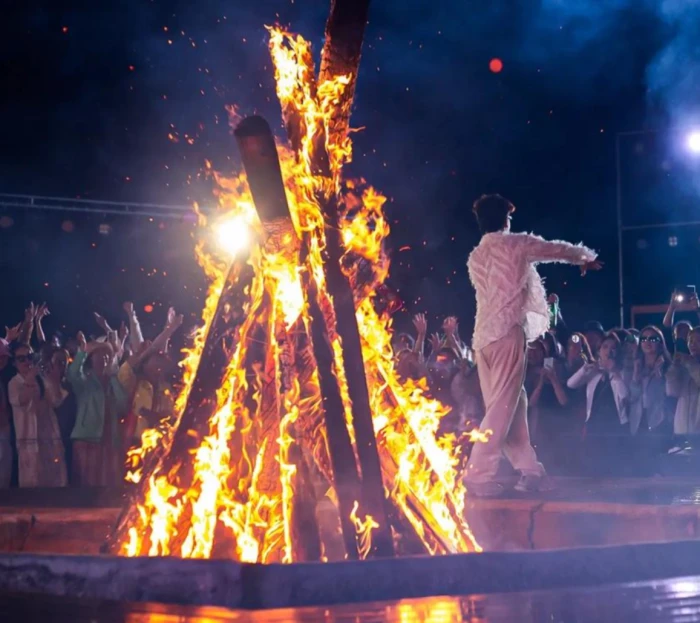
What Is Pitta: The Fire Inside Your Body
The Sanskrit root of Pitta is tapa — "to heat" or "to burn." Ayurveda sorts human energy into three doshas: Vata (wind), Pitta (fire), Kapha (earth-water). Pitta sits second and governs everything in the body that involves "transformation" — digestion, metabolism, body temperature, skin color, and the sharp edge of thought: judgment, discernment, critique. If Vata is the body's delivery driver, Pitta is the body's cook: it turns what you eat into energy you can use, and what you see into judgments you can act on.
Want to know if you're Pitta-dominant? The Ayurveda Constitution Quiz will give you a working answer. What follows is what you can do once you know.
Are You Pitta: Four Signatures
Pitta-dominant people carry four signatures: hot, sharp, oily, light. See how many you recognize —
You probably know someone like this: runs warm when others reach for a sweater, wears a T-shirt outside in winter. Skin leans oily, prone to breakouts — especially forehead and chin. Eyes are bright and assessing — when they look at you, it feels like they're evaluating. Mind is sharp, talks fast, executes fast; in meetings they're the first to point out what's wrong. Appetite is strong, digestion is fast — when they're hungry they must eat now, or get cranky. Perfectionist, demanding of others, harder on themselves. That's a Pitta face.
- Sharp, decisive
- Clear goals, strong execution
- Strong digestion, even temperature
- Rosy complexion, bright eyes
- Irritable, competitive, critical
- Oily skin, breakouts, mouth ulcers
- Acid reflux, heartburn, loose stools
- Waking early, night sweats
Key distinction: "Pitta type" ≠ "Pitta imbalance." A balanced Pitta is simply smart, decisive, efficient — but even-tempered, with steady digestion and clear skin. The goal isn't to extinguish the fire; it's to give it a boundary. Snuffing the fire isn't regulation — it's disarming yourself.
Pitta Faces You May Recognize
Abstract descriptions only go so far. Let's look at some familiar faces.
Gordon Ramsay, the British chef who yells for a living. We won't talk about his Michelin stars — let's go small: on the show Hell's Kitchen, a contestant overcooked the pasta and Ramsay dumped the entire pot into the trash, then screamed at the person for three solid minutes. What you may not know: when he was young, he worked under Marco Pierre White, who yelled at him harder. Ramsay once hid in a kitchen corner, cried it out, then came back and kept cooking. Pitta fire is like that — harsh on others, harsher on itself. Fire never picks who it burns.
Serena Williams, fire on the tennis court. We won't talk about how many Grand Slams — let's go to the 2018 US Open final: she was given a code violation because her coach signaled from the stands. She argued with the chair umpire for nearly twenty minutes, then smashed her racket, lost a point, lost the match. Afterward she said, "I'm not fighting for me, I'm fighting for all women." There's truth in that — but in that moment, the fire had burned past its boundary. That's Pitta competitiveness: wants to win everything, even an argument. Wins the argument, loses the match.
Ernest Hemingway is literature's most blazing fire. He survived two plane crashes in Africa; the next day, lying in a hospital bed, doctors said he couldn't move, and he started writing. "I can still hold a pen." That fire produced the hardboiled style that defined a generation of American prose — and it eventually burned him out. At 61, after electroshock therapy took away his ability to write, he ended his own life. That's Pitta at the extreme: when the fire burns too long, what it consumes is you.
Find out your Ayurveda type — 100% free, no email required → Ayurveda Constitution Quiz
If you see yourself in any of them — even a flicker that makes you flush — what follows matters for you especially.
How the Fire Burns Over: Modern Life's Bellows
What does fire fear most? Not lack of fuel. Lack of boundary. A campfire with edges is warmth; a campfire in a wind is wildfire.
Pitta imbalance doesn't arrive overnight. It's more like flames inching higher, and at first you think, "I'm on fire today." Common signs:
- Temper rising — snapping over small things, regretting it after
- Oily skin, breakouts, ulcers at the corners of the mouth or on the tongue
- Acid reflux, heartburn — hunger hits and you must eat now
- Early waking (not insomnia) — 4 or 5 a.m., bright and ready
- Increasingly harsh on others, harsher on yourself
- Wanting to win everything, even casual conversations
Picture a Pitta-imbalanced afternoon: you've just had lunch, you should be sleepy, but you can't sit still. Three projects running in your head at once. A colleague's draft lands in your inbox, you spot three problems in one glance, and you fire off a sharply worded email. Palms a little damp, face warm, and you think, "I'm on fire today." By evening, your partner asks, "How was your day?" and you snap for no reason, then regret it. That wasn't you — that was the fire.
Modern life is practically engineered to stoke Pitta — KPIs, deadlines, competition, productivity tools, caffeine, late-night hot pot. Every one of them feeds the fire and blows the bellows.
Now that you know how the fire burns over, the rest is straightforward — do the opposite. Give the fire a boundary.
Cooling the Fire: Cool, Moist, Bland, Slow
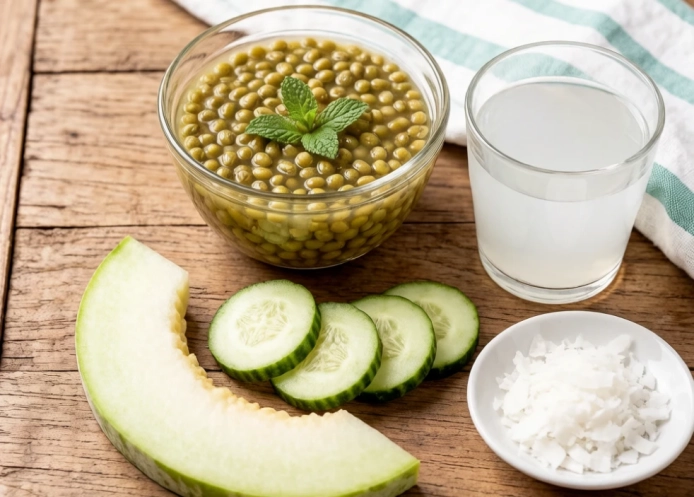
Pitta's signatures are "hot, sharp, oily, light," so the diet reverses them: cool, moist, bland, slow. Each word addresses a specific quirk of fire.
Cool counters "hot" — favor cooling foods, avoid scalding and spicy. Moist counters "sharp" — juicy and watery, less dry and cutting. Bland counters "oily" — less oil, less salt, fewer heavy flavors, so the digestive fire doesn't have to work overtime. Slow counters "light" — chew slowly. Pitta eats fastest of the three; give the stomach a fighting chance.
| Type | Good for Pitta | Minimize |
|---|---|---|
| Vegetables | Cucumber, broccoli, leafy greens, asparagus, sweet potato | Heavy raw onion, garlic, chili |
| Fruit | Melon, coconut, grapes, pears, pomegranate | Excess sour citrus, unripe fruit |
| Grains | Rice, oats, wheat, barley | Heavy corn, buckwheat |
| Legumes | Mung beans, red lentils, tofu | Heavy lentils, fermented beans |
| Fats | Coconut oil, olive oil, small amounts of ghee | Heavy sesame oil, deep-fried food |
| Spices | Cilantro, mint, fennel, turmeric | Heavy chili, black pepper, salt |
Pitta's food golden rule: cool, juicy, lightly seasoned, eaten slowly.
Ayurveda's taste theory: Pitta does well with sweet, bitter, astringent — sweet soothes, bitter cools, astringent reins in. Minimize sour, salty, pungent — they all feed the fire. Put plainly: a Pitta person trying to "blow off steam" with spicy hot pot and cold beer is pouring gas on a volcano.
Giving Fire a Limit: Routine Beats Willpower
Pitta is "fire." What fire fears most isn't lack of fuel — it's lack of boundary. Give it a limit and it stops being wildfire.
Here's the great Pitta paradox: the people most afraid of losing control are the ones who burn out fastest. Pitta is fire; fire wants to burn, win, prove itself. Tell a Pitta person to stop when it's time to stop and they'll say, "I can push one more hour." That "one more hour" is where Pitta lives and breaks.
What Pitta most needs to build isn't "what to eat" but "when to stop, when to cool down, when to let yourself off the hook." These look dull, but for Pitta each one beats any cooling tea:
- Power down by 10 p.m.: Pitta metabolism runs hot; working late is overtime for the fire. After 10 p.m. the body's heat automatically cranks up a notch.
- Midday rest: 10 a.m. to 2 p.m. is Pitta's peak — and its most likely burnover window. Ten to fifteen minutes with eyes closed after lunch is like banking the fire.
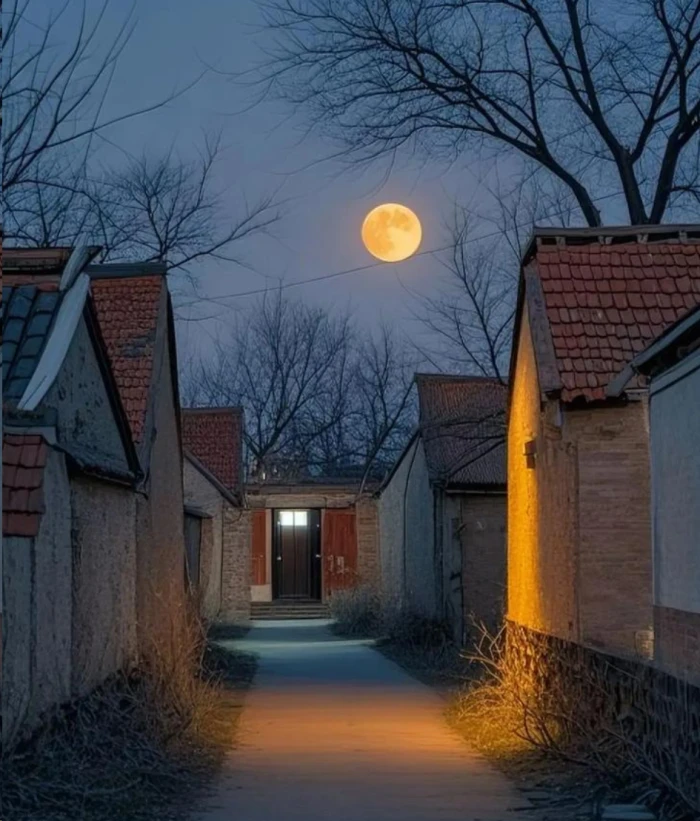
- Moonlight walk: an old Ayurvedic prescription — walk slowly outside for 15–20 minutes after moonrise. Sounds woo, but it cools more effectively than herbal tea.
- Don't make decisions angry: Pitta is the most prone to firing off emails, slamming tables, and dropping verdicts while hot. Cooling the fire before you speak is a lifelong practice.
Pitta imbalance almost always traces back to "couldn't stop" — competition, perfectionism, attachment to outcome. Lock the boundary in first, then talk about cooling herbs. Otherwise the tea is just a rinse. A Pitta person using willpower to stay awake is like fanning a stove with a paper fan — the harder you fan, the brighter it burns, and what burns is you.
Want to start with breath? Abdominal breathing is the simplest way to bring the fire down — five minutes and you'll feel the flame settle.
Herbs Are Support, Not the Main Act
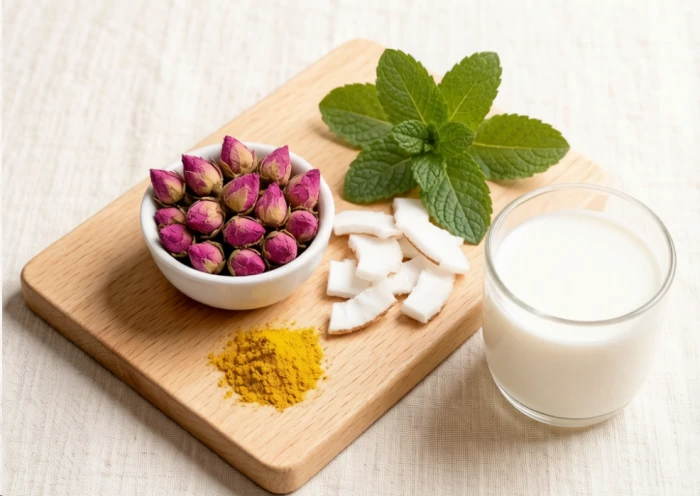
Worth saying three times: herbs are support, not the main act. Stay up late every night, eat hot pot three meals a day, and the best coconut water on earth won't save you. Lock the boundary in first — then herbs have room to work.
Once the boundary is in place, these herbs have traditional use and modern research behind them for Pitta:
Coconut water: naturally cooling, electrolyte-rich — Ayurveda's classic Pitta cooler.
Rose tea: cools the blood, soothes the liver. Calms Pitta's "heat."
Mint: cooling and dispersing. After meals, mint tea suits Pitta better than coffee.
Turmeric: gently anti-inflammatory. Helps Pitta-driven skin issues. Note "gently" — turmeric itself is slightly warming, so don't overdo it.
Magnesium: modern research ties magnesium to nerve stability. Pitta runs tight and replays the day at night — see our magnesium & sleep guide.
Cooling tea isn't a fire extinguisher — it's a step stool the fire can climb down from.
Things Pitta Should Do Less
For Pitta, "do less" beats "do more." Each of these is a common Pitta pusher — every one feeds the fire:
- Less late-night work — Pitta awake after 10 p.m. automatically turns up the heat
- Less direct sun — midday sun from 10 to 2 is Pitta's bellows
- Less spicy and greasy food — chili, deep-fried, hard liquor, all pour gas on the fire
- Less relentless competition — winning everything means the fire never rests
- Less speaking while angry — Pitta anger has the highest collateral damage of the three types
- Less harshness with yourself — Pitta's harshest voice isn't aimed at others, it's aimed inward
Give the fire a boundary and it stops being dangerous. Give the fire a time and it stops being out of control.
A Note from Bong

Chinese medicine calls it "rising fire." Ayurveda calls it "Pitta imbalance." Both use "fire" to describe the same body state: red face, irritability, thirst, inflammation. Not a coincidence — it's observation: the body contains something that "burns," and when it goes over, it shows up on the surface.
The modern Pitta disorder isn't about eating the wrong thing. It's about not stopping. Competition, productivity, perfectionism — every one of them feeds the fire. Calming Pitta isn't about buying the fanciest cooling tea. It's about learning to stop when it's time to stop.
Fire isn't there to be put out. It's there to be bounded. Tonight, try this: lights out at 10, no emails, no messages. Give the fire a limit and it will find its way back to where it belongs.
References
- Chopra A, et al. "Ayurvedic medicine for rheumatoid arthritis: a randomized, controlled trial." PubMed, PMID: 21575739.
- NIH National Center for Complementary and Integrative Health, "Ayurvedic Medicine: An Introduction."
- World Health Organization, "WHO Traditional Medicine Strategy 2014-2023."
- Charaka Samhita (English selection), classical Ayurvedic text.
- Sharma PV. "Classical Uses of Medicinal Plants." Chaukhambha Visvabharati.
FAQ
Not at all. A balanced Pitta is decisive, sharp, efficient — often a natural leader. The temper is a signal of imbalance, not a Pitta destiny. Balance the fire and it becomes energy. Don't balance it and it becomes destruction.
Yes, but with restraint. Pitta is naturally competitive and tends to overtrain. Favor rhythmic but not brutal exercise: swimming, yoga, jogging. Avoid high-intensity training in direct sun — midday runs are literal fuel on the fire.
Depends on how long it's been off and whether you can actually stop. The good news: Pitta responds faster than Vata — give the fire a boundary and the body reacts quickly. The hard part is that Pitta most resists "stopping," so the work is mental, not method.
Highly overlapping, but not identical. TCM's "shang huo" is more symptom-based (mouth ulcers, breakouts, irritability); Pitta imbalance is more constitution-based (this person is naturally fire-prone). Two systems, same phenomenon, different angles. To check your TCM constitution, take the TCM Constitution Quiz.
Find Your Type
Are you Vata, Pitta, or Kapha?
Take the Ayurveda constitution quiz and get your primary dosha plus a personalized result page. This article covers general Pitta care; your result page gives you specific recommendations.
Start the quiz