If you've ever lain awake at 3 a.m. with your thoughts running like a faucet you can't shut off, your hands and feet cold no matter how you pile the blankets — you may have been visited by something Ayurveda calls Vata.
In Chinese medicine, the hours between 3 and 5 a.m. belong to the Lung meridian — the time when light sleepers tend to wake. Curiously, Ayurveda calls the same pre-dawn window "Vata time," the most wind-agitated part of the day. Two systems, separated by the Himalayas, meet in the same sleepless hour. Coincidence? Probably not.
Vata isn't a disease. It's a constitutional tendency — like being naturally run hot or cold. This article is plain wellness education, with no ads or product pushes. Read easy.

What Is Vata: The Wind Inside Your Body
The Sanskrit root of Vata is va — "to move" or "to flow." Ayurveda sorts human energy into three doshas: Vata (wind), Pitta (fire), Kapha (earth-water). Vata sits first, not because it's the most important, but because it's the most sensitive — when it goes sideways, the other two follow. Classical Chinese medicine says something strikingly similar: "wind is the chief of a hundred diseases." Wind arrives first, then the rest follow.
Want to confirm whether you're Vata-dominant? The Ayurveda Constitution Quiz gives you a working answer. What follows is what you can do once you know.
Are You Vata: Four Signatures
Vata-dominant people carry four signatures: light, mobile, dry, cold. See how many you recognize —
You probably know someone like this: eats whatever they want and never gains weight, small frame, cold hands and feet year-round, skin that turns ashy in winter. Their mind runs fast — you start a sentence and they finish it. Emotions flare and pass quickly; one minute laughing, the next anxious. They pick things up fast and forget them just as fast — yesterday's half-finished conversation? They'll ask, "wait, what were we talking about?" That's a Vata face.
- Imaginative, full of ideas
- Lively, talkative, quick learner
- Light on the feet, flexible
- Adaptable to change
- Anxious, insomnia, racing thoughts
- Scattered focus, forgetful
- Cold extremities, dry skin, constipation
- Wired but tired, frayed nerves
Key distinction: "Vata type" ≠ "Vata imbalance." A balanced Vata is simply thin, active, full of ideas — but sleeps well, digests steadily, and stays even-keeled. The goal isn't to eliminate Vata; it's to bring it back into rhythm. Caging the wind isn't regulation — it's self-sabotage.
Vata Faces You May Recognize
Abstract descriptions only go so far. Let's look at some familiar faces.
Björk, the Icelandic artist. In a 1990s interview she mentioned walking for hours every day — "otherwise the things in my head won't come down." That's classic Vata self-rescue: too much wind, so she uses her feet to pull it back to the ground. Her creative process is the same — start with a strange sound, stay up all night until the song is done, then sleep for three days. That's the Vata rhythm: burst, burst, burst, then collapse.
Steve Jobs is the textbook case. We won't talk about the iPhone launch — let's go small: he used to call engineers at two or three in the morning to argue about the position of a single pixel in an icon. Tight nerves, no? He once ate only carrots and apples for weeks, turned his skin orange, and didn't think anything of it. That's Vata imbalance dressed up as "I'm fine": nerves cranked to the ceiling while the body quietly falls apart.
Franz Kafka is literature's most restless Vata. By day he worked at an insurance office, processing other people's workplace injury claims; by night he wrote the most unsettling novels in the canon. He wrote his fiancée Felice letters dozens of pages long, then broke off the engagement — twice. The Vata drive in him was almost pathological: he couldn't stop, and he lived on the not-stopping. His diary: "When I'm writing, I'm completely real." It sounds romantic. It's actually a Vata lament: when he stopped, he didn't know where he was.
Find out your Ayurveda type — 100% free, no email required → Ayurveda Constitution Quiz
If you see yourself in any of them — even a flicker — what follows matters for you especially.
How the Wind Goes Wild: Modern Life's Traps
What does wind fear most? Not cold. Chaos. A wind that blows on schedule is a breeze; a wind that changes direction every minute is a squall.
Vata imbalance doesn't arrive overnight. It's more like a slow chill creeping in from the corner. Common signs:
- Cold hands and feet, especially in winter
- Light sleep, easy waking, vivid dreams
- Anxiety, thoughts that won't stop
- Digestion that fluctuates — bloating, constipation
- Dry skin, chapped lips, cracking joints
- Tired but can't wind down
Picture a Vata-imbalanced 3 p.m.: you've just had your second coffee, stomach a little empty, mind racing. You've got five browser tabs open, you're replying to two messages, half-thinking about tonight's writing. Your hands are a bit cold but you don't notice. By end of day you're too tired to speak — but you can't relax. That tiredness isn't in your body. It's in your nerves. The wind has gone wild.
Modern life is practically engineered to scramble Vata — coffee on an empty stomach, scrolling until 2 a.m., eating while doing three other things, weekend catch-up sleep until noon. Each one adds another random variable to the wind inside you.
Now that you know how the wind goes wild, the rest is straightforward — do the opposite. Give the wind a rhythm.
Taming the Wind: Warm, Moist, Oily, Steady

Vata's signatures are "dry, cold, light, mobile," so the diet reverses them: warm, moist, oily, steady. Each word addresses a specific quirk of wind.
Warm counters "cold" — favor warm food, avoid raw and cold. Salads, iced drinks, and chilled dishes burden Vata. Moist counters "dry" — soups, porridges, stews; fewer dry hard foods. Oily counters "dry" — good fats in moderation: ghee, olive oil, warm milk are Vata-friendly. Steady counters "chaos" — regular meals, fewer snacks, no skipped meals. Vata hates running on empty.
| Type | Good for Vata | Minimize |
|---|---|---|
| Vegetables | Cooked root veg (carrot, sweet potato, pumpkin), cooked greens | Raw salads, raw tomato, raw onion |
| Fruit | Stewed apple, banana, mango, papaya, grapes | Excess dried fruit, cold raw fruit |
| Grains | Rice, oats, wheat, quinoa | Heavy corn, buckwheat |
| Legumes | Red lentils, mung beans (small amounts) | Soybeans, black beans (gas-forming) |
| Fats | Ghee, olive oil, sesame oil | Trans fats, deep-fried |
| Spices | Ginger, cinnamon, nutmeg, fennel | Heavy bitter, pungent, astringent |
Vata's food golden rule: warm, cooked, oiled, on time.
Ayurveda also talks about "taste" (rasa). Vata does well with sweet, sour, and salty — they're grounding and warming. Minimize bitter, pungent, and astringent — they're dry, light, cold, and stack on Vata's weaknesses. Put plainly: a Vata person trying to detox on bitter green juice is essentially self-harm.
Giving Wind a Rhythm: Routine Beats Supplements
Vata is "wind." What wind fears most isn't cold — it's chaos. Give it a rhythm and it stops being a squall.
Here's the great Vata paradox: the people who need routine most resist it most. Vata is wind; wind wants to move, jump, switch. Tell a Vata person to wake, eat, and sleep at the same time every day and their first reaction is "that's so boring." That boredom is the cure.
What Vata most needs to build isn't "what to eat" but "when to eat, when to sleep, when to move." These look dull, but for Vata each one beats any supplement:
- Wake at the same time: even on weekends. Vata's nervous system craves predictability.
- Sleep before 10 p.m.: Vata imbalance is most aggravated by late nights.
- Three meals on schedule: skipped meals are a Vata disaster — the wind gets wilder.
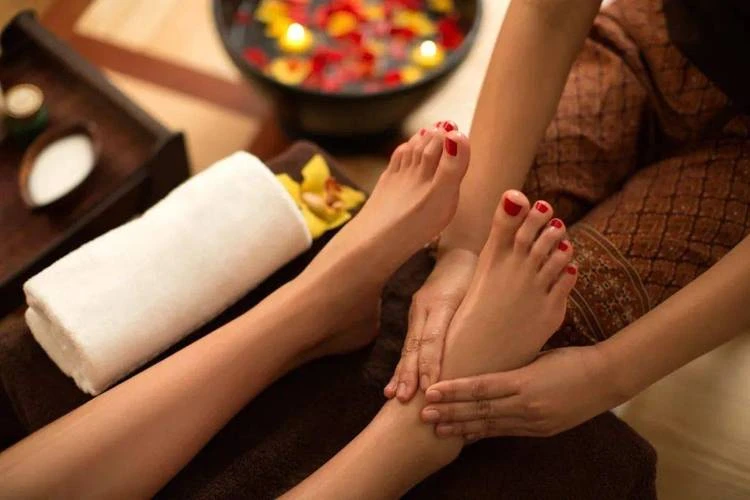
- Morning warm-oil massage (abhyanga): warm sesame oil or ghee, self-massage from scalp to soles for 5–10 minutes, then shower. Classic Ayurvedic practice — physically adds the "moisture and warmth" Vata lacks.
Vata imbalance almost always traces back to rhythm — late nights, skipped meals, overstimulation. Fix the routine first, then talk about herbs. Otherwise you're polishing a leaky faucet — looks shiny, still drips.
Want to start with breath? Abdominal breathing is the simplest, most portable practice — five minutes and you'll feel the nerves slow.
Herbs Are Support, Not the Main Act
Worth saying three times: herbs are support, not the main act. Stay up till 2 a.m., skip two meals a day, and the best ashwagandha on earth won't save you. Lock the rhythm in first — then herbs have room to work.
Once rhythm is in place, these herbs have traditional use and modern research behind them for Vata:
Ashwagandha: Ayurveda's classic nerve-calmer. Multiple studies show positive effects on stress and sleep. See our ashwagandha guide.
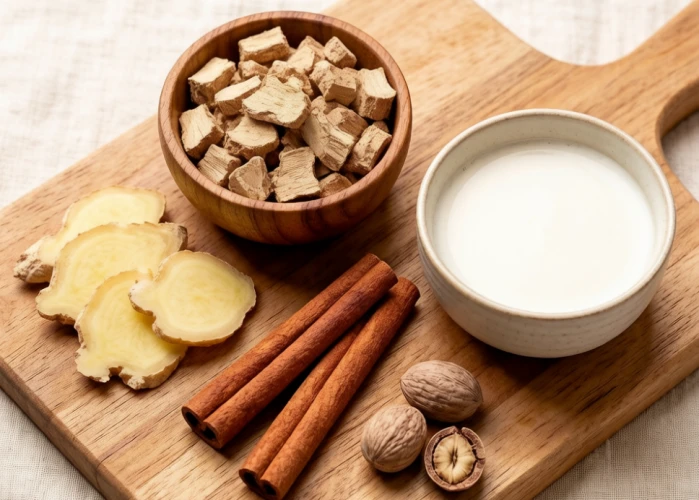
Ginger: warms the middle, kindles Vata's digestive fire. A thin slice before meals helps.
Cinnamon: warms, supports circulation. Lovely in warm milk or oatmeal.
Warm milk + nutmeg: a classic Ayurvedic bedtime combo — warm milk with a small pinch of nutmeg.
Magnesium: modern research links magnesium to nerve stability and sleep. Vata-dominant people tend to run tight — see our magnesium & sleep guide.
Things Vata Should Do Less
For Vata, "do less" beats "do more." Each of these is a common Vata pusher — every one adds chaos to the wind:
- Less staying up late — late nights are Vata's #1 trigger
- Less coffee on an empty stomach — stimulates already-wired nerves
- Less raw and cold food — raw salads are a Vata burden
- Less long-distance running and HIIT — Vata does better with gentle movement; over-exertion scatters
- Less skipped meals — an empty stomach makes Vata wind wilder
- Less multitasking — Vata is most prone to "starting one thing before finishing another"; nerves get tighter
Give the wind a rhythm, and it stops being a problem. Give it a direction, and it stops being chaos.
A Note from Bong

Chinese medicine calls wind "the chief of a hundred diseases." Ayurveda puts Vata first among the three doshas. Two traditions, divided by the Himalayas, agree on one thing: what moves, deranges first. Every process in the body that involves movement — breath, heartbeat, thoughts, digestion — is the first to go when rhythm breaks.
The modern Vata disorder isn't about eating the wrong thing. It's about losing the rhythm. Late nights, skipped meals, scrolling, multitasking — each adds a random variable to the wind. Calming Vata isn't about buying the most expensive herbs. It's about nailing down when you sleep and when you eat. Rhythm settles, wind follows.
Tonight, try this: lights out before 10, do nothing, just lie there. The wind will slow on its own.
References
- Chopra A, et al. "Ayurvedic medicine for rheumatoid arthritis: a randomized, controlled trial." PubMed, PMID: 21575739.
- Lopresti AL, et al. "A double-blind, placebo-controlled pilot study of Ashwagandha for stress and anxiety." PubMed, PMID: 28471730.
- NIH National Center for Complementary and Integrative Health, "Ayurvedic Medicine: An Introduction."
- World Health Organization, "WHO Traditional Medicine Strategy 2014-2023."
- Charaka Samhita (English selection), classical Ayurvedic text.
FAQ
Vata isn't an illness — it's a constitutional tendency. The goal is balance, not elimination. A balanced Vata is still thin, active, full of ideas — but sleeps well, digests steadily, stays even-keeled.
Not really. Vata does best with rhythmic, gentle movement: walking, yoga, tai chi, qigong. Long-distance running and HIIT tend to scatter Vata further. If you want to train hard, make sure your Vata is balanced first — otherwise you'll feel worse, not better.
Depends on how long it's been off and how much you can change. Mild cases improve in weeks; deeper ones take months. Routine is the core, herbs are support. If nothing shifts after a month or two, see a qualified Ayurvedic practitioner or TCM doctor.
Not the same, though they overlap. TCM "Qi deficiency" leans toward "not enough drive" (fatigue, shortness of breath). Vata imbalance leans toward "too much movement, chaotic" (anxiety, insomnia, scattered). Two systems, different angles. To check your TCM constitution, take the TCM Constitution Quiz.
Find Your Type
Are you Vata, Pitta, or Kapha?
Take the Ayurveda constitution quiz and get your primary dosha plus a personalized result page. This article covers general Vata care; your result page gives you specific recommendations.
Start the quiz