Have you had a stretch like this? Nothing you can quite name, just a tight chest, as if a breath never quite made it out; a throat that feels like a stick is stuck in it, can't swallow it down or cough it up; no energy for anything, and when someone asks what's wrong, you can't answer. Chances are someone has leaned over and told you, "You're just overthinking it." But in TCM, it's usually not overthinking — it's that old resident called "qi" sitting in traffic. It has a proper name: the Qi Stagnation constitution. If that phrase is new to you, take a few minutes to skim The 9 TCM Body Types: Which One Are You? first, and you'll have a better idea where you stand.
Put plainly, qi stagnation isn't a disease — it's more a temperament of "qi not flowing smoothly." Think of it as a river: the water isn't missing or dried up, it's just that the upstream is blocked in a few bends by silt and snags, so it moves with effort. The fix isn't to drain the river but to clear the blocked spots and let the wind carry the stuffiness off. This isn't mysticism; it's what happens when you watch the line "the liver governs free coursing" for a thousand years and take notes. See how the whole job is like sorting out a room that never gets its windows opened? Standing at the door saying "just cheer up" is the same as talking at the window — the window stays shut, and the lecture is wasted.
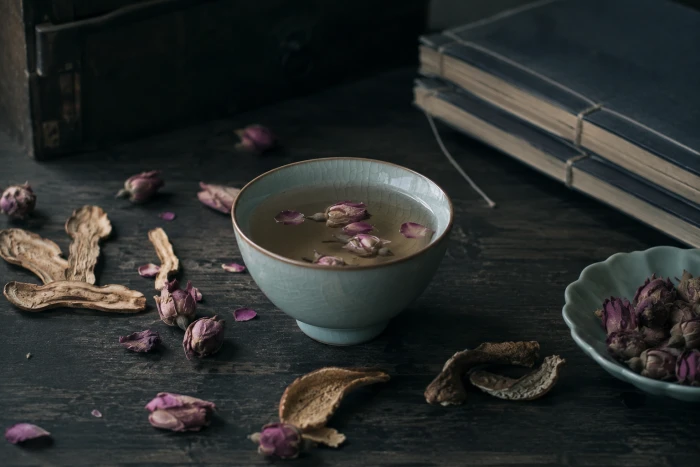
Typical signs of a Qi Stagnation constitution
You almost certainly know someone like this: they talk with a sigh lined up behind every sentence, an "ahh" slipped in like a punctuation mark; they'll tear up over a mildly moving scene before anyone else, but if you ask if they're upset, they shrug and say "I'm fine, I'm fine"; their appetite comes and goes, and when deadlines pile up their gut knots; at night they lie down and their head runs like a radio, replaying the day's words over and over, the more they think the wider awake they get. Your first thought around them is usually "sounds like they're carrying something" — but they're usually the last person to admit it.
Don't jump to claim it yet. Do a quick count yourself — how many of these ring a bell?
- You sigh a lot without realizing it, or you need one long deep breath before the chest feels even a little lighter
- Your flanks and chest feel full or ache with a shifting, vague pain that gets worse the more stressed you are
- Your throat feels blocked, stuck, worse the more pent up you get (the old name for it: "plum-pit qi")
- Your mood swings — you sink low easily, or a small thing sets off irritability and an urge to snap
- Sleep is shallow, dreams are many, the thinking won't stop — but by day you feel drained and drowsy
- For women: breasts feel tender before your period, cycles run early or late, and your mood rides a roller-coaster along with it
To be clear: these are only clues to a "constitutional tendency," not a diagnosis. A real read on qi stagnation takes a practitioner's tongue and pulse examinations (like a "wiry pulse") plus your history into account. It's fine to take a quiz and get a rough idea of which type you lean to; but don't stamp your own label just because it fits two patterns — leave the diagnosing to the people who did the training.
Most people hear "sighing" and think "stop sighing." But watch yourself for a moment: in that instant the sigh leaves you, a little of the tightness in your chest actually comes out with it. TCM calls this "tai xi" — frequent sighing — the body's own pressure-relief valve when liver qi gets stuck at the chest. It's not shameful; it's your body changing the air. What deserves attention is the opposite: that trapped feeling where you can't manage a sigh at all — that's when the qi is truly jammed.
If you checked three or more of these, don't panic — next up is how it actually gets jammed, because once you know how the qi gets tangled, it's easier to smooth it out.
Why it stagnates: emotions, overthinking, and holding it all in
Why does qi get "stuck"? It really comes down to three threads — let me count them out slowly.
- Pent-up emotion is the first one. TCM holds that "the liver governs free coursing," overseeing how qi unfolds through the body. When you stew, suppress, swallow your words, the liver's coursing ties into knots, and qi gets stranded along its channels — the flanks and chest. Where that force goes and how to direct it, I talk through in Five Elements and Emotions: Which Element Matches Yours?.
- Overthinking is a slow simmer. "Thinking knots the qi." Chew on things too long and the qi and blood pile up in the head and chest while the lower body runs on empty. When you can't finish the thinking by day, you carry it to bed — shallow sleep by night, foggy by day.
- Holding it all in is a habit you wrap yourself in. Small circles, long sits, eyes on a screen for hours — the body sits still while the mind stays stuck. Qi stagnation doesn't equal "overthinking"; often it's simply qi with nowhere to go on the physical level. Lecturing yourself into cheerfulness genuinely doesn't work.
What's interesting is that modern medicine's look at "long-term suppressed emotion showing up as body symptoms (somatization)" and at "chest tightness, throat lumps, and gut trouble under stress" points in the same direction as TCM's "liver qi knots up, the qi mechanism stalls" — just in a different language. So the sooner you match these three threads, the easier it unties: emotion is a knot, overthinking is a slow simmer, staying still is a habit. When three ropes twist together, tugging one end alone won't undo it.
For someone with qi stagnation, it all comes back to one word: release — give the qi in your body somewhere to go. Eat right, move right, give emotion an outlet — all of this beats a person locking himself in a room to "think it through."
Now that you've met two of the three threads, it's your turn to pick up — let's start with food.
How to fix it (1): move the qi — eat right and it flows
Adjusting qi stagnation isn't "purging hard" — it's "moving the qi," letting it stir on its own. Three directions cover it: soothe the liver and move qi, tonify the spleen, and calm the spirit — and most of it is stuff already sitting in your kitchen. Here's a quick chart so you can get a picture:
| Category | Eat more | Eat less / avoid |
|---|---|---|
| Liver-soothing ingredients | rosebuds, jasmine, finger citron, tangerine peel, radish, celery, fennel | heavy greasy food, overeating |
| "Friends" of the liver | leafy greens, broccoli, hawthorn (in moderation), mint | overly spicy, dry-fried and fried food |
| Tonify spleen, calm the spirit | lotus seed, millet, yam, lily bulb, longan (in moderation) | strong tea before bed, excess coffee |
| Drinks | rose tea, jasmine tea, finger citron tea, mint tea | iced drinks, strong tea on an empty stomach, excess alcohol |
Here's a go-to "qi-smoothing" recipe anyone can pull off: a few rosebuds and a pinch of jasmine, a quick pour of hot water, five minutes to let it steep. Rose moves qi, jasmine helps untangle; both are gentle enough for daily drinking. And when you're puffed after a meal, a slice of finger citron or tangerine peel in water both moves qi and dries dampness. This isn't about buying the perfect herb — it's about consistency. Two days on, three days off, and you've defeated the whole point.
Sum it up in one line: qi fears being trapped, not being moved. Offer it a warm cup of flower tea and a few leafy greens, and it will take a couple more steps through your body. Qi is like the morning rush at a subway — give the exit enough room and people file out one wave at a time; keep everyone bottled up and the whole tunnel jams. Eating right is opening the door for the qi.
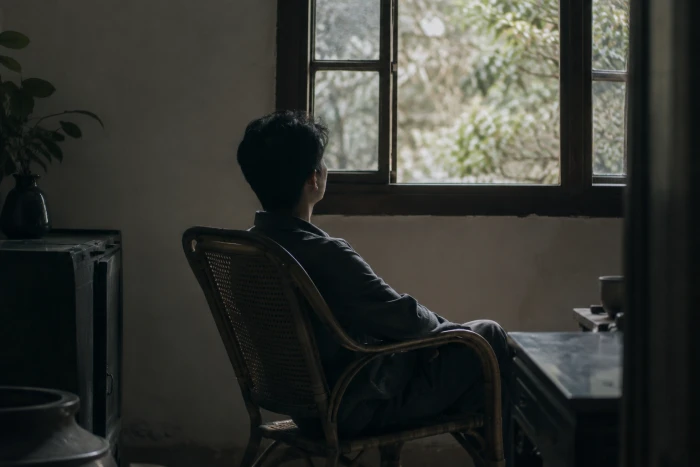
How to fix it (2): exercise to unwind — qi is walked out
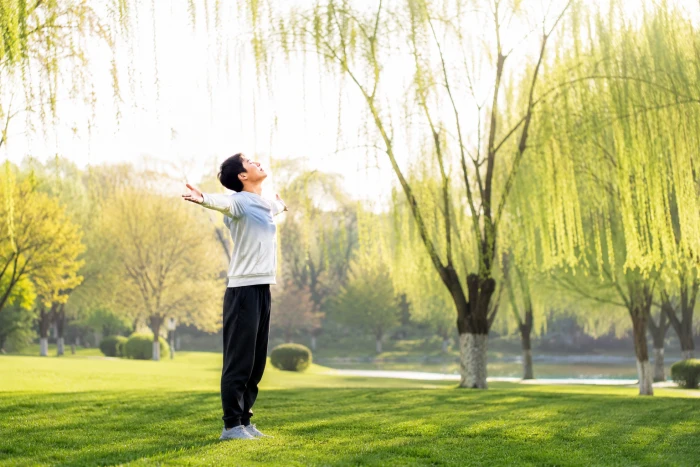
What exercise does for qi stagnation, in one sentence: qi is "walked out," not "thought through." The two best moves for a stagnant constitution — open the chest, breathe deep and out — are themselves opening a doorway for that pressed-down chest with the body. For everyday routine, pick an activity that works up a light sweat and leaves you bright: brisk walking, jogging, yoga, tai chi, Baduanjin — three to five times a week, about thirty to forty minutes a session. The goal isn't "tone"; it's "somewhere for that congestion to go."
Things you can try right now:
- Three minutes of chest-opening breaths: sit tall, lace your fingers behind your back, ease your hands back as you inhale deep and exhale slowly — ten rounds, and your chest will feel lighter.
- Pay a "walking tax" after meals: each day after lunch, circle the block for ten or fifteen minutes — no phone, just walking.
- Sighing is allowed: when you need to sigh, sigh — then add one long exhale and let the body change its air.
Think about it this way: what you're missing may not be one "aha breakthrough" but a few dozen small acts a day that "give the qi somewhere to go." The knot in your chest rarely unties to a motto; it loosens one opened shoulder, one breath taken to the bottom, at a time. There's plenty more to dig into about the tangle between breath and body — Abdominal Breathing: The Simplest Stress Relief Technique and 4-7-8 Method goes deeper if you want to follow it.
Food and movement are both in place now. That leaves the trap people step on most easily — let's talk about why soothing the liver still isn't "purging it."
The trap to avoid: soothing the liver isn't "purging" it
First mistake: qi stagnation is not "one big purge." Formulas with a liver-soothing kick like Chai Hu and Xiao Yao San are for a clear-cut pattern of liver qi binding — not an everyday "tonic" to dose up on when you feel gloomy. If you're on your period or already running short on qi, pushing these hard can leave you more depleted, not better. The second mistake is sneakier: writing off qi stagnation as "just cheer up" or "stop being dramatic" is the most wounding and least useful thing you can say.What emotions need is never a verdict — it's being understood, received, and given an outlet. The more you tell someone "don't dwell," the further the qi gets swallowed. Learn this relationship between emotion and body, and you'll stop being defeated by a breezy "you're just in a mood."
One more layer to know: qi stagnation rarely travels alone. When qi stalls, blood limps along — you end up with "stagnation plus stasis." Left alone, qi deficiency and insomnia start showing up too. If you want to see at once which types you lean toward and how stuck you are, take a standard TCM constitution test and line qi stagnation, blood stasis, and qi deficiency up side by side. If you want to follow the thread of "emotion gets recorded in the body," Stressed and Can't Sleep? Your Body Is Keeping Score lays it out more fully.
If you've had two weeks or more of clearly low mood, no interest in anything, trouble sleeping, or even feeling like nothing is worth it — reach out for professional support soon. This may not be something "constitution adjustment" can fix, and you shouldn't carry it alone. Likewise, if you're pregnant, on your period, or taking antidepressants or other long-term medication, talk to a professional before using any liver-soothing herb or food.
FAQ
Not the same thing. Qi stagnation is a TCM constitution describing a state of "qi not flowing"; it cares about physical flow. Depression is a psychiatric diagnosis. The two can overlap, but don't draw an equal sign — leaning toward qi stagnation isn't having depression, and a real mood disorder needs professional assessment.
Occasional sighs that leave your chest feeling a bit lighter are mostly your body's own regulation — no need to worry. If you constantly feel a "sigh that won't come out" with chest pain, palpitations, or a growing heaviness, get checked for heart, lung, or mood issues.
Not something to self-prescribe. Xiao Yao San soothes the liver and strengthens the spleen, but it's a formula — it should be used under a licensed TCM practitioner's guidance; people on their period, during pregnancy/postpartum, or with a weak constitution shouldn't decide on their own. For daily life, rose tea, walking, and deep breathing are steadier choices.
Easily. TCM constitutions rarely come alone: long-standing stasis blocks blood flow into blood stasis ("qi stasis then blood stasis"), and long-standing stagnation also drains qi, so qi deficiency shows up. Treating it needs priorities and layers — it's best to get a rough map of your tendencies from a constitution test before starting.
A note from Bong
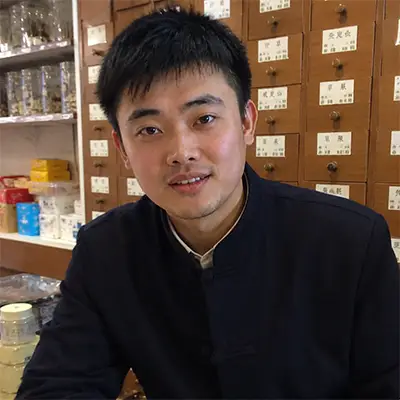
Honestly, I used to think "cheer up" was a kind thing to say. Back in my internet-sector days, I'd be a fireball in a chat window and go dead quiet the moment the screen went dark — not a single word left. Then I ended up missing the customers who wandered into the little herb shop: they didn't come to buy, just to nose around, ask this and that, and leave with nothing. The first time it tried my patience. In time I understood — he didn't come for the medicine; he came to have someone listen to him say a few things. That blocked breath is often less an illness and more a person no one really heard.
So yes, I learned the liver-soothing formulas. But the cheapest remedy I know is letting a person talk it out and get moving. Qi gets tangled, and it gets walked out. So don't push yourself too hard today — take a walk outside, or go talk it through with someone.
References
- Wang Qi et al.: TCM Constitution Studies (classification and criteria for the nine constitutions).
- China Association of Chinese Medicine: Classification and Determination of TCM Constitution (ZYYXH/T157-2009).
- World Health Organization (WHO) fact sheet on mental health: Mental health (a parallel view on emotion and modern stress).
- National Center for Complementary and Integrative Health (NCCIH): Traditional Chinese Medicine.
- General health education on stress and somatic symptoms from public hospitals (a mainstream Chinese perspective).
Which of the nine constitutions are you?
Qi stagnation, blood stasis, qi deficiency, yang deficiency... each constitution has a completely different approach. Take a standard TCM constitution test and see your tendencies in one go.
Take the TCM constitution quiz