Key takeaways
- TCM groups people into nine body constitutions: one balanced type and eight biased types. Most of us are a "mixed bundle."
- No constitution is "good" or "bad" — they are simply your body's factory settings. Understand yours, and you'll know how to eat, rest, and rebalance.
- Want the shortcut? There's a constitution self-check at the end — three minutes to see where you land.
If you keep swinging between "everyone's fine but I'm wiped out," "I catch every cold when seasons change," and "I gain weight just looking at food" — it may not be you being dramatic. It's your constitution talking. In TCM, your constitution is the "owner's manual" your genes and daily habits wrote together.
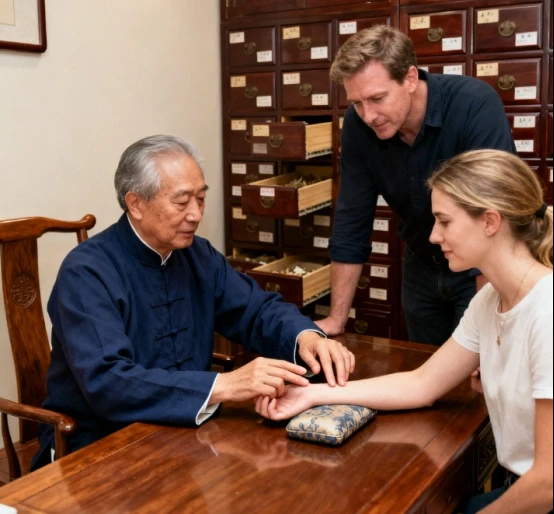
The nine constitutions at a glance
In 2009, the China Association of Chinese Medicine released the Standard of Constitution Classification and Determination in TCM, grouping constitutions into the nine below. Get the big picture first, then see where you fit.
| Constitution | One-line portrait | Typical signals |
|---|---|---|
| Balanced (Pinghe) | The textbook picture of health | Plenty of energy, sound sleep, rarely ill |
| Qi-Deficient (Qixu) | Battery that never fully charges | Tires easily, sweats readily, soft voice, catches colds |
| Yang-Deficient (Yangxu) | Lacking the body's central heating | Cold-averse, cold limbs, prefers warmth, loose stools |
| Yin-Deficient (Yinxu) | A small fire smoldering inside | Hot palms and soles, dry mouth, night sweats |
| Phlegm-Damp (Tanshi) | Swaddled in a damp towel | Tends heavier, more phlegm, heavy body, greasy coat |
| Damp-Heat (Shire) | A stuffy jar in rainy season | Oily skin, breakouts, bitter mouth, dark urine |
| Blood-Stasis (Xueyu) | Traffic jam in the blood and qi | Dull complexion, dark lips, bruises easily |
| Qi-Stagnant (Qiyu) | Emotions tied in a knot | Moody, chest tightness, frequent sighing |
| Special (Tebing) | Over-sensitive alarm system | Allergies, sneezing, rashes |
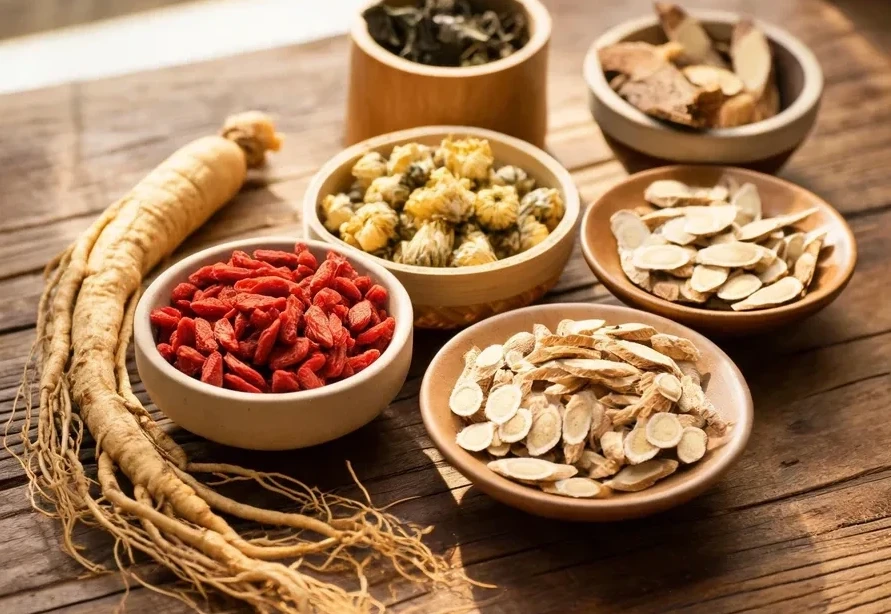
01Balanced (Pinghe): the "factory settings" everyone envies
Like a well-maintained car where the gas, brakes, and tank are all just right — that's probably you, a Balanced type. No need to chase supplements; keeping things as they are is the best care.
The Huangdi Neijing says, "The balanced person is one who does not fall ill." Balanced doesn't mean "never sick" — it means qi and blood are in harmony, yin and yang in balance, and the body regulates itself.
- Steady energy: still has gas in the tank after a full day.
- Sound sleep: drops off quickly, wakes refreshed.
- Easy appetite: enjoys food, never picky or bloated.
- Resilient: handles season changes and travel without flaring up.
02Qi-Deficient (Qixu): a body that never fully charges
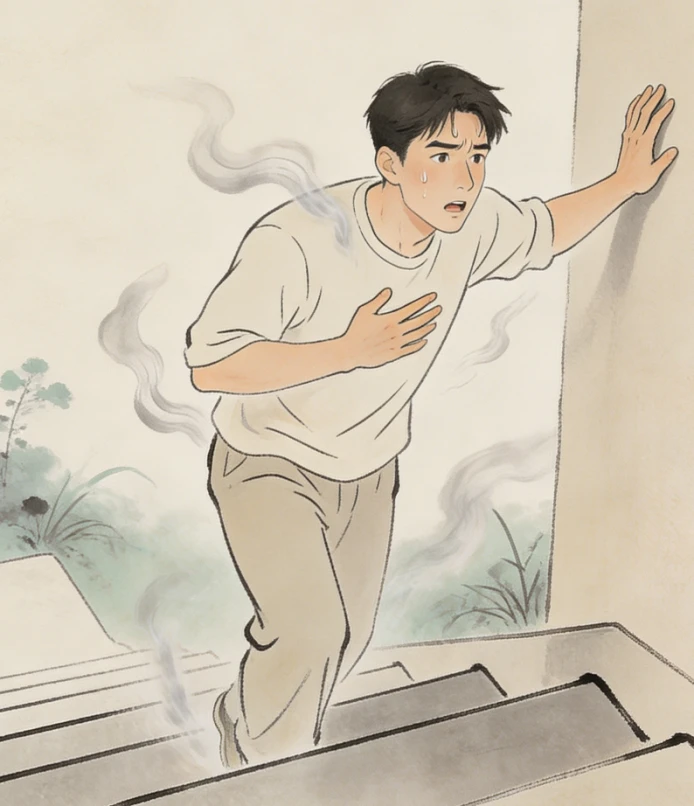
Others climb three flights, catch a breath, and keep going. You sit for ages after — and it's not laziness, it's not enough qi. Qi is the "drive" that runs the body; with qi deficiency, the engine is low on fuel.
- Fatigues easily: even talking or walking feels like work.
- Sweats at the slightest move: light activity brings a clammy sweat.
- Soft voice, short breath: words run out of steam; you often sigh to refill.
- Teeth marks on the tongue: a swollen tongue pressed with tooth prints.
Astragalus tea, yam congee, and red-date millet porridge are gentle ways to replenish qi. Stay up late less and avoid drenching sweats — leave the body some "reserve charge." For exact ways to eat, see how to boost qi.
03Yang-Deficient (Yangxu): a room without heating
In an air-conditioned room others find stuffy, you're in a coat with ice-cold hands and feet — not enough yang to warm you, inside and out.
- Cold-averse, cold limbs: hands, feet, lower back, and belly stay cool year-round.
- Loves warm food: hot drinks are a comfort; cold food disagrees.
- Low drive: always half-asleep, hard to get going.
- Loose stools: the wrong food sends you running.
Hypothyroidism, anemia, and poor circulation also cause chills. If cold intolerance lingers with unusual weight change or extreme fatigue, get checked first — don't just "warm and tonify."
04Yin-Deficient (Yinxu): a small fire inside
Without doing anything strenuous, your mouth is dry and your palms and soles burn — like a little stove lit inside. That's not enough fluids (jin-ye) to moisten and nourish.
Yin is the body's "lubricant" and "coolant." When yin runs low, dryness and empty-heat show up.
- Hot palms and soles: worst in the afternoon and evening.
- Dry mouth and throat: always thirsty, water doesn't help.
- Night sweats: wakes damp, stops on waking.
- Red tongue, little coat: red, with a thin or absent coat.
05Phlegm-Damp (Tanshi): swaddled in a damp towel
Gaining weight from water, a shiny face, and afternoon fog — the body feels wrapped in a damp towel: heavy, stuffy, metabolism a half-beat slow.
Heavier build, thick greasy coat, heavy and sleepy, more phlegm and chest tightness, sticky stools — like "too much water that won't clear."
Oily skin, breakouts, bitter mouth and dark urine, red tongue with yellow greasy coat — like "trapped water steaming into heat."
- Tends heavier: soft flesh, hard to slim down.
- Chest tightness, phlegm: a constant lump in the throat.
- Heavy and sleepy: dozes by day, wakes more tired.
- Thick greasy coat: tongue looks frosted with cream.
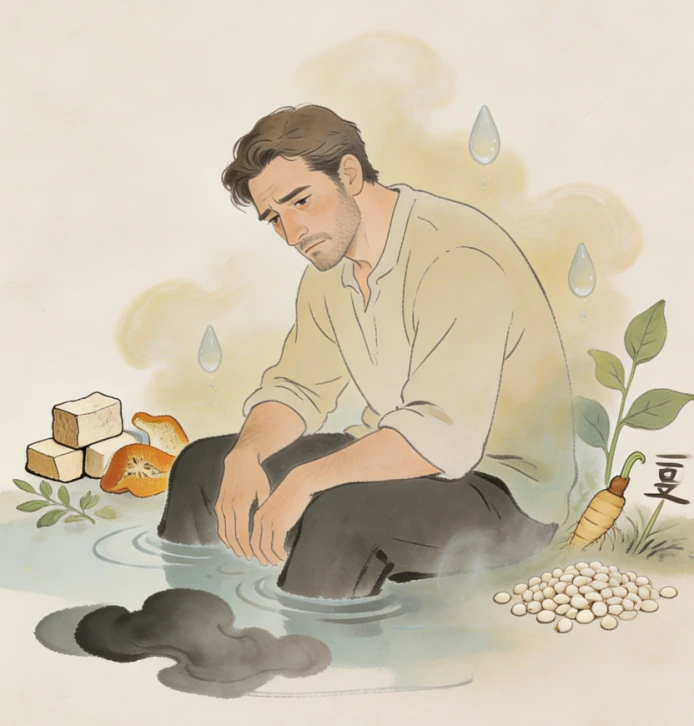
06Damp-Heat (Shire): a stuffy jar in rainy season
Oily face, breakouts on repeat, bitter mouth and bad breath, and sticky bathroom trips — damp-heat is like the plum-rain season trapped in a jar: damp and hot at once.
- Greasy, oily skin: face and hair get oily fast.
- Breakouts: acne that heals and returns.
- Bitter, dry mouth: a bitter taste water won't rinse.
- Darker urine: deep color, strong smell.
Job's tears (coix), adzuki beans, mung beans, and winter melon in moderation. Spicy, greasy, sweet foods and alcohol "pour fuel on the fire" — ease off, and skip late nights.
07Blood-Stasis (Xueyu): a traffic jam in the blood
Bruises out of nowhere, darker lips, slipping memory — blood and qi move like a traffic jam; slow the flow and stasis builds up.
Check whether the veins under the tongue are blue-purple and twisted, if the lips lean dark, and if the skin bruises blue-purple easily — two or more means take note.
- Dull complexion: dark, no glow.
- Darker lips: purple, dim.
- Bruises easily: a light bump turns blue.
- Purple, dark tongue: speckles or patches of stasis.
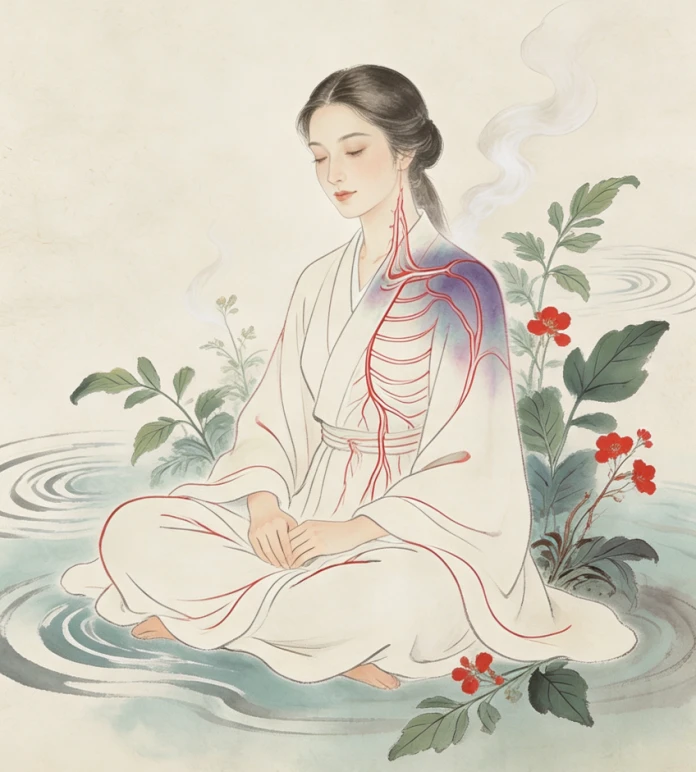
08Qi-Stagnant (Qiyu): emotions tied in a knot
A small thing loops in your head for hours; chest tight, sighing, sleep won't come — emotions knotted like a rope you can't untie, and the body tenses along.
"Just cheer up" isn't the answer. Long-term stagnation is itself a constitutional bias — what you need is release and outlet, not blame for not being easygoing.
- Low mood: sinks into gloom easily.
- Chest and rib tightness: a full, sighing feeling.
- Lump in the throat: always feels something stuck.
- Restless sleep: thoughts race the moment you lie down.
09Special (Tebing): an over-sensitive alarm
Sneezing fits every season change, rashes from seafood, breathless near pollen — your immune system's "alarm" is too sensitive, ringing at the slightest stir.
- History of allergic rhinitis, asthma, or eczema?
- Certain foods (seafood, nuts, mango) bring rashes or swelling?
- Skin breaks into hives or wheals often?
- A close relative has allergies?
- Allergy-prone: sneezing, stuffy nose, itchy eyes in turns.
- Sensitive skin: rashes, redness, itch.
- Poor adaptation: new places and seasons trip you up.
How to tell which type you are
One truth first: few people are a "pure single type." Qi deficiency with yang deficiency, phlegm-damp with damp-heat — that mixed mix is the norm. So don't obsess over "which exact one"; the one or two that lead are enough.
- Which discomfort hits me most — fatigue, cold, dryness, stuffiness, blockage, or allergy?
- What does my tongue look like — teeth marks, swollen, red with little coat, or purple-dark?
- Did my parents lean this way too?
Still unsure? Just take the TCM constitution self-check — a national-standard scale scores you in three minutes and points you in a sound direction.
Frequently asked questions
Genetics play a part, but diet, routine, mood, and environment keep rewriting it. A Balanced type can tilt toward bias through burnout, and a biased type can lean back toward balance with long-term care.
The national-standard scale is a population-level statistical tool; it gives a "tendency," not a diagnosis. Results are for reference only and don't replace a doctor's four examinations.
Absolutely — and it's common. These "compound constitutions" need balanced care: boosting qi without feeding damp, which takes a little pairing know-how.
A Note from Bong

My father ran the family's herbal medicine shop his whole life, filling prescriptions but never writing himself a "tonic formula." He'd say: figuring out which type you are matters far more than popping random supplements.
You don't have to force yourself into a Balanced type. Qi-deficient? Don't grit through it. Yang-deficient? Keep warm. Qi-stagnant? Find an outlet. Go with your body's temperament and it settles on its own.
Sources & references
- China Association of Chinese Medicine. Standard of Constitution Classification and Determination in TCM (ZYYXH/T157-2009).
- Wang Qi. Constitutional Theory of TCM (the source of the nine-constitution model). China Press of Traditional Chinese Medicine.
- National Center for Complementary and Integrative Health. Traditional Chinese Medicine (research progress on the TCM system).
Three minutes to see your constitution
Rather than guess from symptoms, try the national-standard scale. Of the nine constitutions, which one are you?
Start the TCM constitution self-check