Walk past any kitchen where a grandmother cooks and you'll hear the same lines: "Don't eat so much fried food, it'll fire you up." "That fish is too 'heating' — eat less of it." The older generation may never say the word "inflammation," but they know it perfectly well: some foods make the body "catch fire." That's the most down-to-earth anti-inflammatory instinct there is.
Modern science has given that instinct another name: chronic inflammation. And the earliest place you can act on it isn't the medicine cabinet — it's the plate.
Inflammation isn't the enemy: acute vs chronic
Inflammation has gotten a bad name in recent years. But inflammation is actually your body's "fire department" — when you get a paper cut, a cold, or a twisted ankle, your immune system shows up on the scene, and the redness, swelling, heat, and pain are it putting out the fire. That acute inflammation is good; it's a necessary step in healing.
The tricky kind is the other one: the fire was never fully put out, so the fire department stays on duty. Long-term obesity, smoking and drinking, sitting too much, stress, and highly processed diets all keep the body in a low-grade inflammatory state. This "invisible fire" is the one linked to diabetes, cardiovascular disease, and some autoimmune issues.
The good news: the "fire level" of chronic inflammation is largely built up by lifestyle and the dinner table — and it can be pushed back the same way. Diet is the fastest lever you can reach.
- Have you been feeling tired no matter how much you sleep?
- Do your skin, gums, or joints have little flare-ups every few days?
- In your daily diet, does "processed" outnumber "grown in the ground"?
What an anti-inflammatory diet actually is
An anti-inflammatory diet isn't some newly invented "super diet." It's more of a "leaning": eat more of what helps put out the fire, less of what feeds it. The anti-inflammatory eating patterns that keep appearing in research usually share these traits: plant-forward, lightly processed, a reasonable amount of good fats, and little sugar.
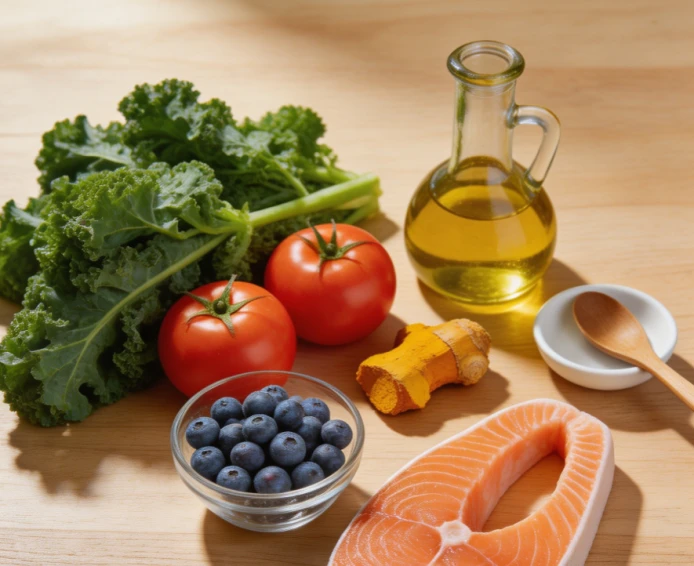
Dark leafy greens, berries, tomatoes, olive oil, nuts, fish (especially mackerel, sardines, salmon), whole grains, ginger, turmeric, garlic — these are the usual "anti-inflammatory all-stars" in the research.
Ultra-processed snacks, sugary drinks, refined white bread, heavy red and processed meats, trans fats, excess alcohol — these track with higher inflammatory markers and belong in the "keep it minimal" column.
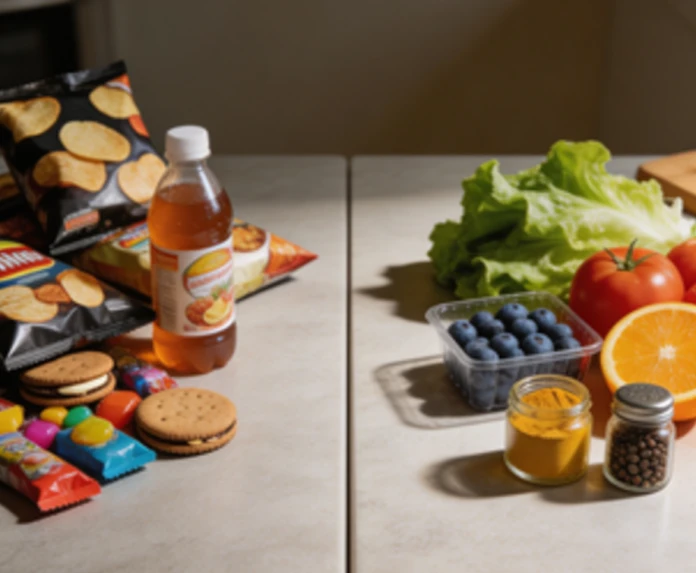
One fried chicken meal today won't set your body on fire; seven fried chicken meals a week will. An anti-inflammatory diet is about long-term tendency, not a single right or wrong. Don't manufacture guilt over "breaking the rules today" — that guilt is itself a helper of inflammation.
One meal at a time: what an anti-inflammatory plate looks like
| Meal | Try something like | The logic behind it |
|---|---|---|
| Breakfast | Oatmeal + blueberries + a small handful of walnuts + a pinch of turmeric | Whole grains + berries + nuts — the anti-inflammatory trio to start the day |
| Lunch | Brown rice + grilled salmon + lots of leafy greens + olive oil | Oily fish brings Omega-3; leafy greens bring fiber and polyphenols |
| Dinner | Mixed bean soup + steamed broccoli + a piece of tofu + a sprinkle of ginger | Plant protein + cruciferous vegetables + gentle spices |
| Snack | A small handful of almonds, some tomatoes, Greek yogurt | A "grab-and-go option" to replace cookies and sugary drinks |
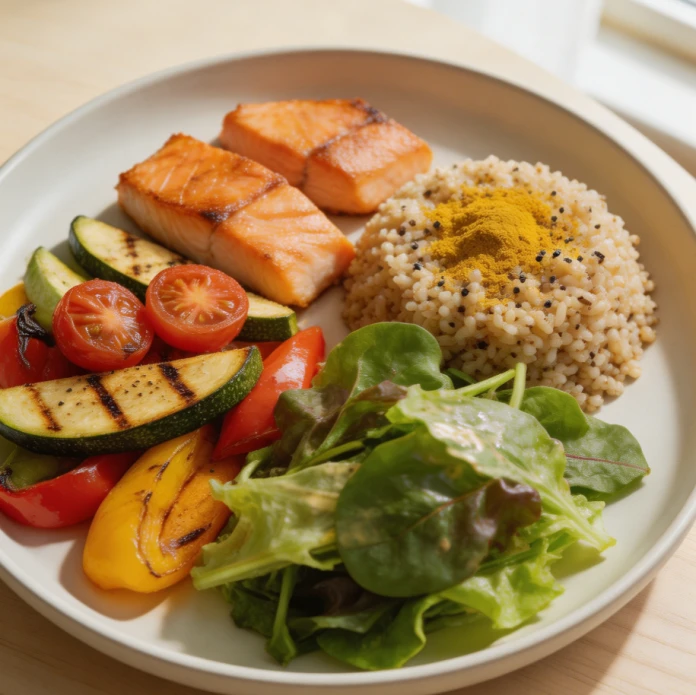
No need to copy the menu above exactly. Three principles are enough: a bit more color, a bit less processing, a bit more good fat. The rest is up to your taste and your wallet.
TCM view: "heating foods" and "dampness" as inflammation
TCM doesn't have the word "inflammation," but it has its own vocabulary: "heating up," "damp-heat," "heating foods." Look closely and they overlap heavily with what modern medicine calls chronic inflammation — redness, greasiness, recurrence, heaviness. TCM describes dampness as "heavy, turbid, sticky, and lingering" — exactly that state of "stuck and never quite gone," which sounds a lot like the dragging feeling of low-grade inflammation.
The Chinese character for "inflammation" is made of two fire characters — fire on top of fire, excess. TCM doesn't treat "heating up" by simply clearing heat; it first sorts out whether it's "excess fire" or "deficiency fire," whether it's "damp" or "heat."
Interestingly, what TCM tells people with "damp-heat constitution" to eat less of — fried food, sweets, alcohol, excess spice — overlaps heavily with the "keep it minimal" list from modern anti-inflammatory research. Two systems, completely different languages, pointing at the same thing: don't keep your body "on fire."
Three common myths: don't mythologize "anti-inflammatory"
No single food "cures" inflammation-related chronic disease. Turmeric and berries can be powerful, but they can't hold up against staying up late and drinking sugary drinks. Food is a "tendency," not a "cure."
No. The point is to cut down on ultra-processed and red meat — not to go fully vegetarian. Moderate fish, poultry, and legumes are all great. Extreme diets are their own kind of stress.
If tests show significantly elevated inflammatory markers (like C-reactive protein), or there's a diagnosed condition, diet is only a support — you must follow medical advice. No matter how healthy your lifestyle, it can't replace necessary medical care.
If your check-up already flags an inflammation-related condition (cardiovascular, metabolic, autoimmune, etc.), dietary changes are only a supplement — you must follow prescribed medication and regular follow-ups. And don't buy high-dose turmeric or curcumin supplements on your own — supplements aren't food, and excess carries its own risks.
No single meal can save you, and no single meal can ruin you. But every meal votes for your body — for "putting out the fire," or for "adding fuel."
A one-week list to start tomorrow
- At least one dark leafy green or cruciferous vegetable a day (spinach, broccoli, kale)
- Swap one refined staple for a whole grain (oats, brown rice, quinoa)
- Oily fish twice a week, or get Omega-3 from flaxseed and walnuts
- Use olive oil as your main cooking oil, and avoid repeatedly frying at high heat
- Swap sugary drinks for water or herbal tea — start with 3 days a week
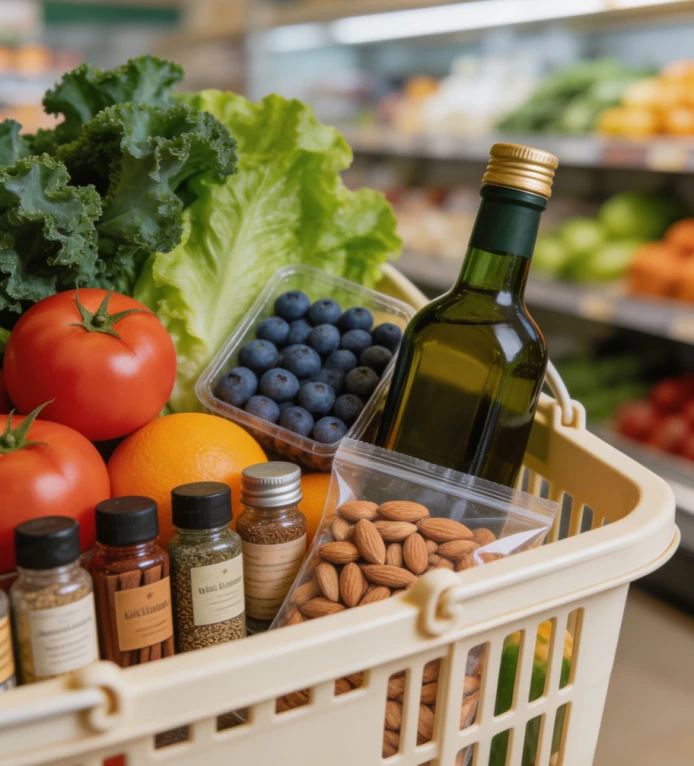
Don't overreach. Pick just one of the five, keep it up for a week, and add the next one once it sticks. Habits aren't built overnight, and neither is inflammation — the good news is, with the direction right, every meal is a step back toward calm.
FAQ
Chronic inflammation has no single "symptom." It usually shows up as a combination: ongoing fatigue, skin issues that keep returning, digestive discomfort, gums that bleed easily, tight joints. To confirm it, checking markers like high-sensitivity C-reactive protein (hs-CRP) in your blood is the direction — but that's a doctor's call. Don't diagnose yourself with an online "inflammation checklist."
Turmeric contains curcumin, which shows anti-inflammatory activity in test-tube and animal studies, but the human absorption rate is low. Eating it with black pepper (which contains piperine) improves absorption. Using it as a daily spice in moderation is fine; expecting "turmeric capsules to cure disease" isn't supported by evidence. If you want a high dose, talk to a doctor first — don't stack supplements on your own.
The core of an anti-inflammatory diet is "food variety," not "dieting." As long as you get enough protein, fat, and carbs with plenty of vegetables and fruit, nutrition only gets more balanced. The one thing to watch: if you're also cutting out multiple food groups at once (like both gluten and dairy), get a dietitian's help to avoid running low on iron, calcium, or B12.
A Note from Bong

As a kid, the plate of bitter melon on the dinner table — the moment I saw it, my chopsticks took a detour. The adults would always chant "sweet comes after bitter," but all I could think was: a vegetable this bitter, what's the point?
It took years behind the pharmacy counter to understand the unspoken second half of that saying: restraint. Everything you send down the hatch every day, your body is quietly keeping accounts on — today it logs the fried food, tomorrow the sugar water, and when the balance builds up, it comes to settle the bill with you.
This article about anti-inflammation has said just about enough. The rest belongs to tomorrow morning's bowl of oatmeal — take the bitter step first, and the sweet days come with a steadier footing. I'm off to shell a couple of walnuts.
References
- Harvard Health Publishing. "Foods that fight inflammation." Harvard Health
- Minihane A.M. et al. "Low-grade inflammation, diet composition and health: current research evidence and its translation." PubMed Central
- World Health Organization. "Healthy diet." WHO
Which body type are you closest to?
TCM constitutions are closely tied to inflammation — people with damp-heat or phlegm-dampness constitutions especially need "firefighting" food. Spend 3 minutes finding your constitution.
Take the TCM constitution quiz