Writing this, the series has finally reached its last season. We've talked about spring's rising, summer's release, autumn's gathering — three seasons that feel like one long rehearsal: spring plants the seed, summer lets the branches run wild, autumn brings the harvest into the barn. And winter? Winter is the quietest stretch of the whole rehearsal: all the noise steps off the stage, and your body takes the lead. It doesn't ask you to do much. It just asks you to "store well."
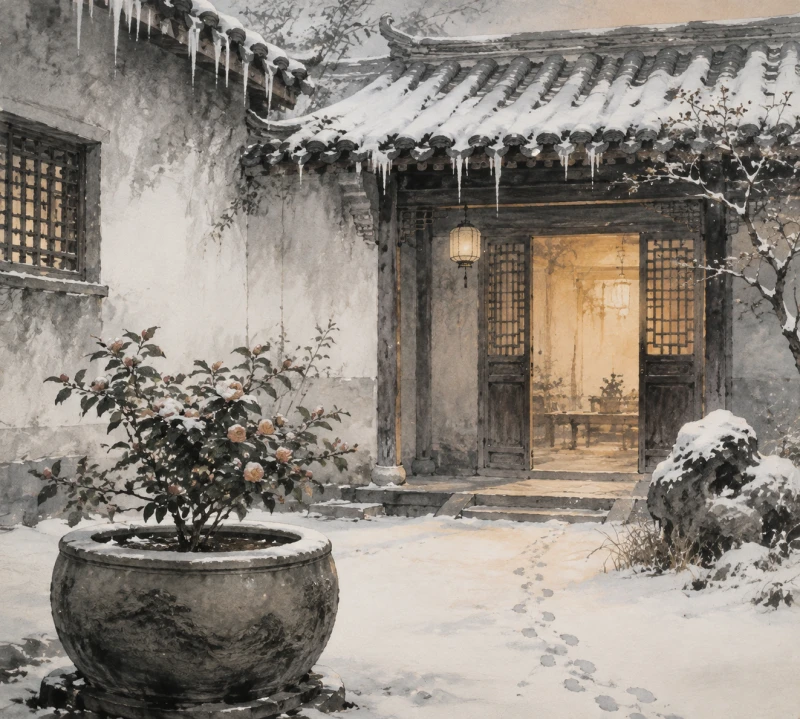
The Core of Winter Wellness: Storing & Kidney Care
The Neijing gives winter the most laid-back lines of the whole text: “The three months of winter are called bi cang” — everything closes and stores away. Water freezes, the ground cracks, animals retreat to their dens. People do the same: yang returns to the body's depths, and the year's essence is tucked away for later.
The big direction for winter: store your yang, care for your kidney essence, keep warm and away from cold. Get winter's “storing” right and you'll have strength to rise again in spring — this is the final baton of the seasonal cycle, and the most important one.
“Storing” isn't lying flat — it's a deliberate holding back: store your body (don't freeze), store your spirit (don't overwork the mind), store your energy (don't overdraw). TCM's old line “if you don't store essence in winter, you'll fall ill in spring” means exactly that: burn through your reserves in winter, and spring's little ailments come knocking.
“The three months of winter are called bi cang. Water freezes and earth cracks; do not disturb the yang. Sleep early and rise late, waiting for the sunlight.” — Huangdi Neijing · Suwen · Four Qi Tiao Shen Da Lun
Note this one — “sleep early, rise late, wait for the sunlight.” It's the exact opposite of spring's “sleep late, rise early.” The sun rises late in winter, so you rise late too, moving only after the light comes. A thousand-year-old farming book calling this wisdom; on today's schedule it means: don't force yourself to jog in the dark before dawn.
The Six Solar Terms of Winter
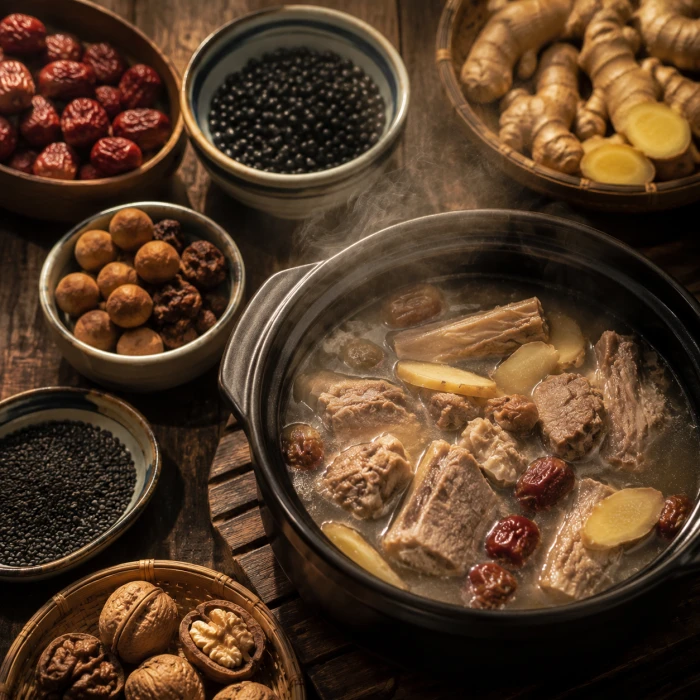
Winter runs from Start of Winter to Slight Cold and Great Cold — six solar terms. The first two still trail autumn; the last four are real “counting-nines” deep winter:
| Solar term | Around | Climate | Wellness focus | Foods to favor |
|---|---|---|---|---|
| Start of Winter | Nov 7–8 | Water begins to ice, earth begins to freeze | Store yang, stay warm, begin kidney care | Black beans, walnuts, lamb, chestnuts |
| Light Snow | Nov 22–23 | First snow may come; cold builds | Warm and tonify, protect lower back and knees | Red dates, longan, ginger, beef |
| Great Snow | Dec 6–8 | More snowfall; everything hides | Guard against cold, protect yang, early to bed | Lamb, black sesame, Chinese yam, pumpkin |
| Winter Solstice | Dec 21–23 | Shortest day; yin at peak, yang is born | Best time for warm tonics; store kidney essence | Lamb soup, black beans, chives, longan |
| Slight Cold | Jan 5–7 | “Three-nines” cold; yang weakest | Stay warm, protect feet and back | Ginger, red dates, beef, radish |
| Great Cold | Jan 20–21 | Coldest of the year; winter ends | Consolidate kidneys, store essence, prep for spring | Black beans, walnuts, Chinese yam, glutinous rice |
Kidney Care: Winter's Top Priority
Winter corresponds to the Water element, and Water's organ is the Kidney. In TCM the Kidney is more than one organ — it's the body's total energy-storage system: it governs jing (the fundamental substance of life), rules bones and marrow (bones and brain), helps hold breath down, and manages the ears and hair.
- Early to bed, don't stay up — staying up drains kidney essence fastest
- Protect the lower back and ankles — “the waist is the house of the kidneys”
- Eat moderate black foods — black beans, black sesame, black rice (TCM: “black enters the kidney”)
- Don't overdo it; leave some “reserves” in the tank
Want to know how your kidney qi is doing? Start with the TCM Body Constitution Test — the “Yang Deficiency” profile, with its cold hands and feet, fatigue and chill-aversion, is the one most tied to weak kidney yang.
Early to Bed, Late to Rise: Charging Your Yang
Winter's most counterintuitive wellness tip: don't get up early. Not “sleep till noon” — but “early to bed, late to rise, wait for the sunlight.” On dark, freezing winter mornings, forcing yourself up before the yang rises is like starting a phone on an empty battery.
Winter Eating: Warm, Black Foods, Don't Over-Tonic
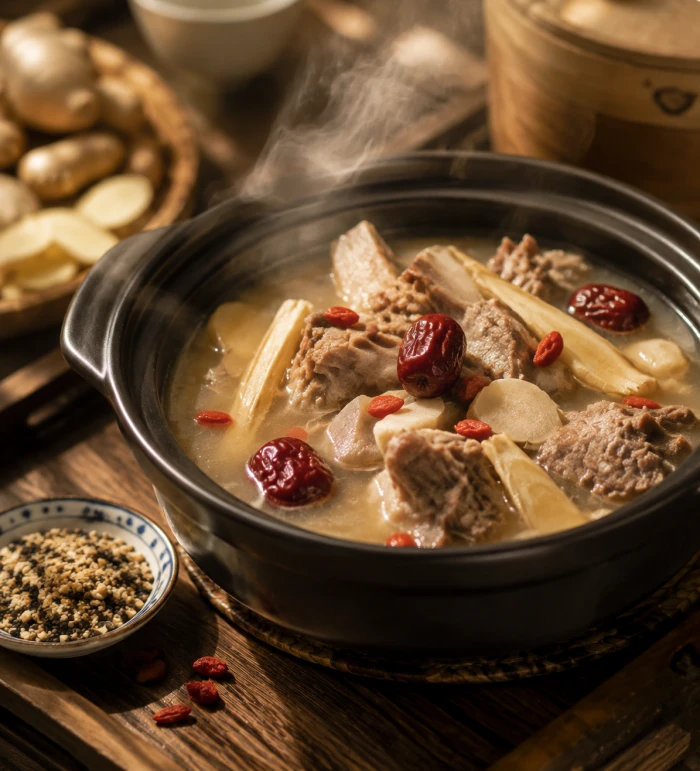
Winter eating in one line: avoid cold, prefer warm, black foods enter the kidney, and tonic in the right order. The northern saying “eat radish in winter, ginger in summer” is only half the story — radish helps keep things moving; the real stars are warm, kidney-nourishing foods.
- Warm first: lamb, beef, ginger, longan, red dates, chives (but watch portions if you run hot)
- Black enters the kidney: black beans, black sesame, black rice, black fungus, mulberries
- Roots: Chinese yam, radish, sweet potato, potato — “eat roots in autumn-winter,” the deepest-stored energy
- Tonic order: strong spleen → warm tonic directly; weak spleen → strengthen the spleen first (yam, millet), then warm tonic — don't jump straight to heavy tonics
Ingredients: 500 g lamb, 15 g angelica root (dang gui), 50 g ginger (sliced), 5 red dates, a small handful of goji berries.
Method: ① Blanch the lamb in cold water to remove the gamey taste; ② put everything in a clay pot with plenty of boiling water; ③ bring to a boil, lower to a simmer for 1.5 hours; ④ add goji and a pinch of salt before serving.
Notes: This is the home version of the Han-dynasty classic “Angelica, Ginger & Lamb Soup” — suited to yang-deficient people who run cold. If you easily flare up, are yin-deficient, or have a fever, skip it. When in doubt, ask a practitioner.
Exercise & Daily Life: Store Without Stiffening

Should you exercise in winter? Yes — but the rule changes: store without stiffening; move without drenching. Winter exercise keeps the qi and blood moving; it's not for grinding yourself to exhaustion.
Good winter picks: Baduanjin, tai chi and brisk walking — controllable intensity, no drama, fits the season's “storing” rhythm. For a step-by-step, see the Baduanjin guide for beginners.
Cold Hands and Feet: A Yang Deficiency Signal?
The fix isn't toughing it out — it's three angles at once:
- Warm up: ankles, lower back and the back of the neck are the “draft holes” — protect these three first in winter
- Soak your feet: warm water (around 40°C) for 15 minutes at night, warm but not scalding
- Eat right: warm foods like ginger, longan and lamb; and check the Phlegm-Dampness Constitution guide — if dampness is heavy, tonics don't take; strengthen the spleen first
If cold hands and feet come with marked fatigue and shortness of breath, cross-check the Qi Deficiency guide too. Persistent, one-sided or painful cold deserves a doctor's visit — don't tough out something real.
A Note from Bong

How long has it been since you switched off your phone at nine in the evening and just went to bed earlier, doing nothing? Winter hands you the year's best excuse. As for the rest — let the blanket answer for you.
Ask an AI Assistant for a Custom Winter Plan
References
- Huangdi Neijing · Suwen · Four Qi Tiao Shen Da Lun — source of the “three months of winter” teaching.
- China Meteorological Administration, official notes on the 24 solar terms (Start of Winter to Great Cold).
- World Health Organization, materials on Seasonal Affective Disorder (SAD) and light therapy.
- Shanghan Zabing Lun (Treatise on Cold Damage) by Zhang Zhongjing — source of the “Angelica, Ginger & Lamb Soup” formula.
FAQ
No. Tonic-ing is about matching your pattern — yang-deficient people warm-tonic, yin-deficient people actually need to nourish yin (blind lamb-eating will flare them up), and phlegm-damp people should strengthen the spleen first. The wrong tonic hurts more than no tonic. When unsure, check your constitution and ask a practitioner.
Simple winter coldness that improves with warmth is usually yang deficiency or low qi and blood — helped by foot-soaking, warm food and moderate exercise. But cold on only one side, cold with pain or numbness, or cold that persists in summer, deserves a medical check for vascular issues.
Yes, but wait for the sun and the temperature to come up, away from the coldest hour. Keep it to a light sweat and dry off fast afterward. Those with high blood pressure or heart conditions should ask a doctor before winter morning training.
Some winter “padding” is your body's natural energy-storing instinct — don't panic over it. Control late-night snacking, move regularly (even a daily 30-minute walk), and sleep enough; sleep deprivation actually makes weight gain easier.
Find Your Body Constitution
Which body constitution are you?
18 questions · about 3 minutes · to point your winter wellness in the right direction.
Start the test